The Understudy's Republic: Why the Leaders Nobody Trained Keep Saving the World

The Understudy's Republic: Why the Leaders Nobody Trained Keep Saving the World
Power tends to flow toward preparation. Dynasties invest in heirs. Parties cultivate successors. Academies train the next generation of officers and officials. The groomed candidate, the anointed successor, the carefully prepared replacement — these are the figures around whom institutional continuity is organized. They are also, with a frequency that ought to trouble anyone who thinks seriously about leadership, not the ones who matter most when the crisis arrives.
The understudy keeps getting the role. And then, against all expectation, keeps delivering the performance.
Claudius, the Joke Who Became Emperor
Tiberius Claudius Drusus Nero Germanicus survived the Julio-Claudian dynasty's serial homicides for one reason: nobody thought he was worth killing. He walked with a limp, stammered in public, drooled under stress, and spent his early life writing histories of the Etruscans and Carthaginians — the kind of scholarly retreat that marks a man the powerful have already written off. When Caligula's Praetorian Guard assassinated that emperor in 41 CE and discovered Claudius hiding behind a palace curtain, they made him emperor largely because the alternatives were more dangerous and he was already there.
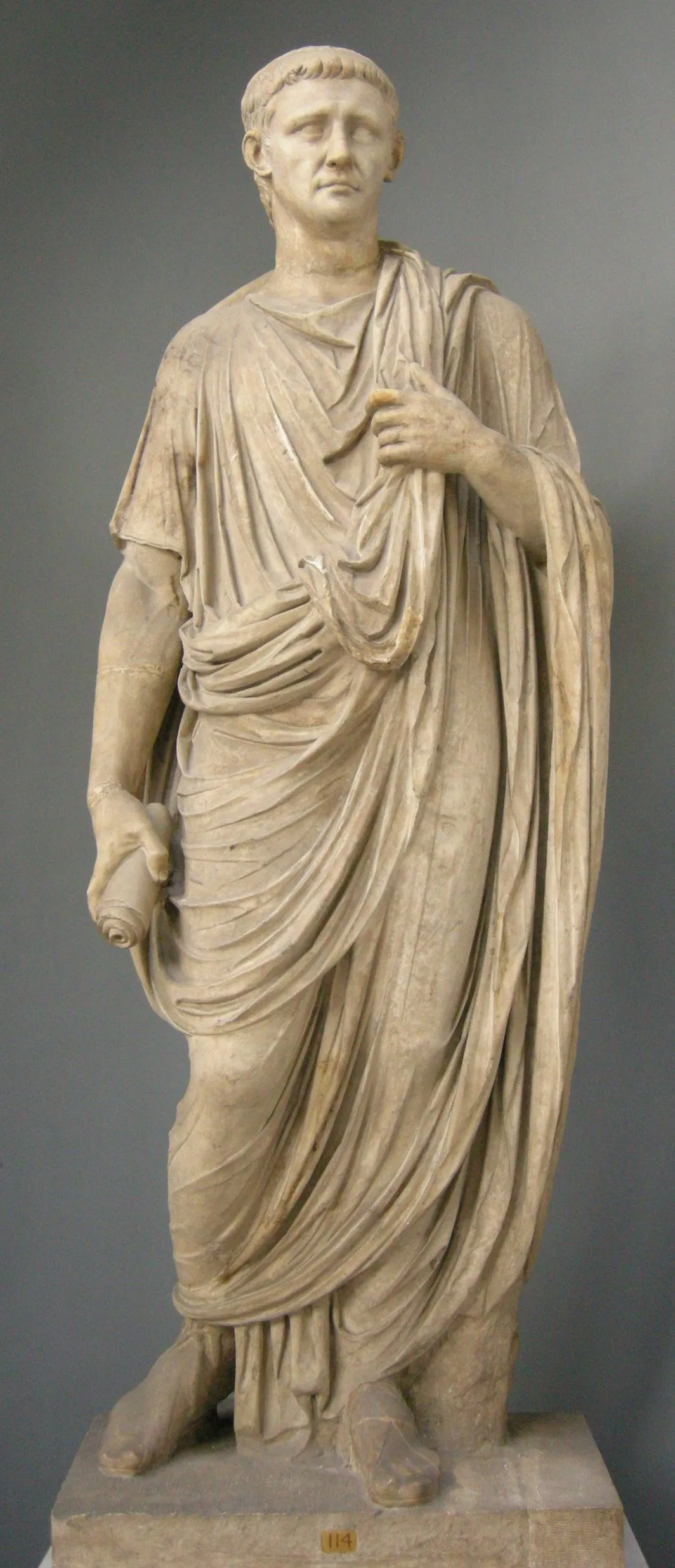 Photo: Claudius, via i.pinimg.com
What followed confounded every expectation. Claudius proved to be an able administrator, an aggressive builder of infrastructure, a successful military commander whose invasion of Britain actually stuck, and a reformer of the Roman bureaucracy who created the professional administrative class that would govern the empire for generations. He was not a great man in the theatrical sense. He was something rarer: a competent one who understood the machinery of governance because he had spent decades studying it with no expectation of ever being asked to operate it.
The scholars who have puzzled over the Claudius paradox tend to focus on the man. The more interesting question is the pattern.
The Psychology of Having Nothing to Lose
Groomed successors carry a particular burden that the accidental leader is spared: the weight of anticipated performance. The heir apparent has been told, implicitly or explicitly, that they are destined for the role. Their identity becomes entangled with the expectation of succession. When the moment arrives, they are not simply making decisions — they are performing the role they have been rehearsing, managing the gap between who they were trained to be and who the situation actually requires.
The understudy has no such burden. They arrive at power without a prepared self-image to protect, without a coalition of supporters whose investment in a particular version of them must be repaid, and often without the ideological commitments that grooming tends to install. They are, in a meaningful psychological sense, free — not because they are better people, but because they have less to lose by being honest about what they do not know.
Harry Truman is perhaps the most consequential American example. Franklin Roosevelt kept his vice president so thoroughly excluded from the inner councils of wartime governance that Truman learned of the Manhattan Project's existence only after Roosevelt died and the bomb was months from deployment. He had not been prepared for the presidency. He had been prepared to attend Senate ribbon-cuttings and preside over procedural votes.
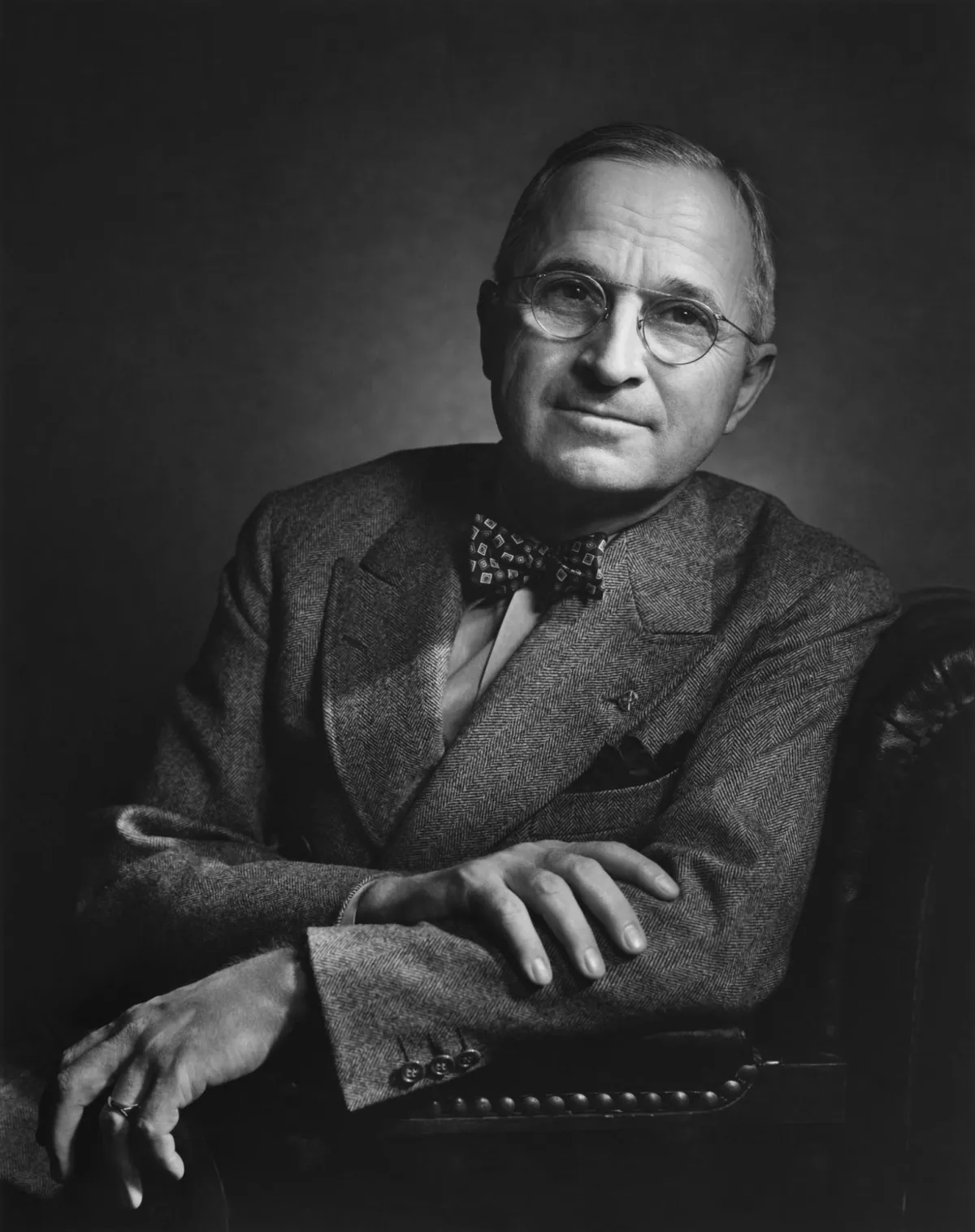 Photo: Harry Truman, via karsh.org
What Truman did with the presidency — the Marshall Plan, the Truman Doctrine, the integration of the armed forces, the navigation of the early Cold War — was not the execution of a prepared vision. It was improvisation by a man who had spent enough time watching power operate to understand it, without having spent so long anticipating his own exercise of it that he confused the map for the territory.
The Grooming Problem Across Civilizations
The failure rate of prepared heirs is not a modern phenomenon, and it is not explained by individual inadequacy. It is structural.
The Ottoman system of succession — in which princes were raised in the palace harem, educated by tutors selected for loyalty rather than quality, and insulated from any experience of actual governance — produced a sequence of sultans whose personal qualities varied enormously but whose performance in office was consistently disappointing relative to the resources of the empire they inherited. The exceptions, predictably, were rulers like Suleiman the Magnificent, who came to power young enough that his grooming had not yet fully calcified, and Selim I, whose path to the throne was sufficiently contested that he had been forced to develop genuine political and military instincts.
The Meiji Restoration in Japan offers an instructive counterexample. The men who transformed Japan from a feudal society into an industrial power in a single generation were, almost without exception, low-ranking samurai from peripheral domains — men who had been excluded from the established succession of authority and therefore had no investment in the existing order. They were the accidental leaders of a national revolution, and they outperformed the hereditary officials who had been groomed to manage the Tokugawa system precisely because they had not been taught to manage the Tokugawa system.
What Preparation Actually Prepares You For
This is not an argument against education, mentorship, or institutional training. It is an argument about what those things actually produce.
Preparation is excellent at transmitting the known. It installs the procedures, the precedents, the professional vocabulary, the established coalitions. It teaches the successor how the institution has worked. What it cannot teach — and what the historical record suggests it may actively impede — is the capacity to recognize when the institution's accumulated knowledge is wrong, when the precedents do not apply, when the established coalition's interests have diverged from the public's.
The groomed leader knows what their predecessors knew. The accidental leader knows what they have personally observed. In periods of stability, the former is more valuable. In periods of genuine rupture — which are the periods that determine whether civilizations survive — the latter tends to matter more.
Lincoln had been a one-term congressman of modest reputation before the presidency. Eisenhower had never held elected office. Both arrived at moments of institutional crisis without the ideological encumbrances that a longer political career would have installed, and both governed with a pragmatic flexibility that their more thoroughly prepared contemporaries could not match.
The Understudy's Advantage
There is a final element to this pattern that the purely structural analysis misses. The accidental leader, having never been told they were destined for power, often retains something the groomed successor loses early: a realistic assessment of their own limitations.
Claudius spent decades being underestimated. Truman spent years being treated as a political afterthought. That experience does not produce humility in every person who lives it — but in those with the temperament to use it, it produces something more valuable than any curriculum: the habit of asking for help, the comfort with uncertainty, and the absence of the catastrophic overconfidence that grooming tends to install in those it selects.
Five thousand years of succession crises, dynastic collapses, and institutional ruptures have produced a consistent finding. The person the system prepared is rarely the person the moment required. The person the moment required was usually waiting behind a curtain, studying something nobody thought would ever matter.