The Pedestal Problem: Why Republics Keep Building Thrones for Their Own Generals

There is a particular kind of political crisis that democratic societies manufacture entirely by themselves, with the best of intentions, in their finest hours. It does not arrive through conspiracy or coup. It arrives through gratitude.
When a republic needs a war won, it gives one man extraordinary authority, extraordinary resources, and an extraordinary share of the national narrative. When that man wins — or appears to win — the republic then discovers that the tools it used to elevate him are far more durable than the tools it retained to restrain him. The pedestal, it turns out, was always also a throne. It just took a victory parade to make that visible.
This is not a modern problem. It is not even a particularly American problem, though America has produced some of its most instructive examples. It is a problem as old as the first city-state that handed a general a sword and a mandate and then asked, politely, for both back.
Alexander and the Machinery of Deification
Alexander of Macedon did not invent the concept of the divine general, but he industrialized it. The son of a king who had already bent the Greek city-states into a Macedonian alliance, Alexander inherited both an army and a mythology. What he added was conquest — and conquest, at sufficient scale, produces a psychological pressure that civilian authority has almost never successfully withstood.
 Photo: Alexander of Macedon, via www.historyofmacedonia.org
By the time Alexander reached Egypt, he had won enough battles that his soldiers believed he could not lose. The Egyptians offered him the title of pharaoh, which carried divine implications, and Alexander accepted. This was, on one reading, shrewd diplomacy — local legitimacy in a conquered territory. On another reading, it was the moment the feedback loop became irreversible. A man who is divine cannot, by definition, be held accountable by men who are not.
The Macedonian generals who served under him understood this perfectly. After his death, they did not restore the republic. They divided the divinity.
The Roman Iteration
Rome spent roughly four centuries developing increasingly elaborate constitutional machinery designed to prevent exactly this outcome. The consulship was dual precisely so that no single man could accumulate the symbolic weight of sole command. The triumph — the grand procession awarded to victorious generals — was carefully circumscribed: the general rode in glory, but a slave stood behind him in the chariot, whispering memento mori. Remember you will die. Remember you are mortal. Remember the republic outlasts you.
The whisper stopped working.
Marius reformed the Roman army in the late second century B.C. by a necessary and rational measure: he opened enrollment to the landless poor, who had previously been excluded. The unintended consequence was that soldiers now owed their land grants, their pensions, and their futures not to the Senate but to their general. Loyalty followed money, as it always does. Within a generation, Rome had armies that would march on the city itself if their commander asked.
Sulla did ask. So did Caesar. The constitutional machinery did not fail because it was poorly designed. It failed because the psychological bond between a victorious general and his soldiers is older, more visceral, and more immediate than any citizen's abstract attachment to senatorial procedure.
MacArthur and the Congressional Address
On April 19, 1951, General Douglas MacArthur addressed a joint session of Congress and received seventeen standing ovations. He had just been relieved of command by President Harry Truman — a decision that was constitutionally unambiguous, politically courageous, and almost universally unpopular in the immediate term. Truman's approval rating fell to twenty-six percent. MacArthur's motorcade in New York drew an estimated seven million people.
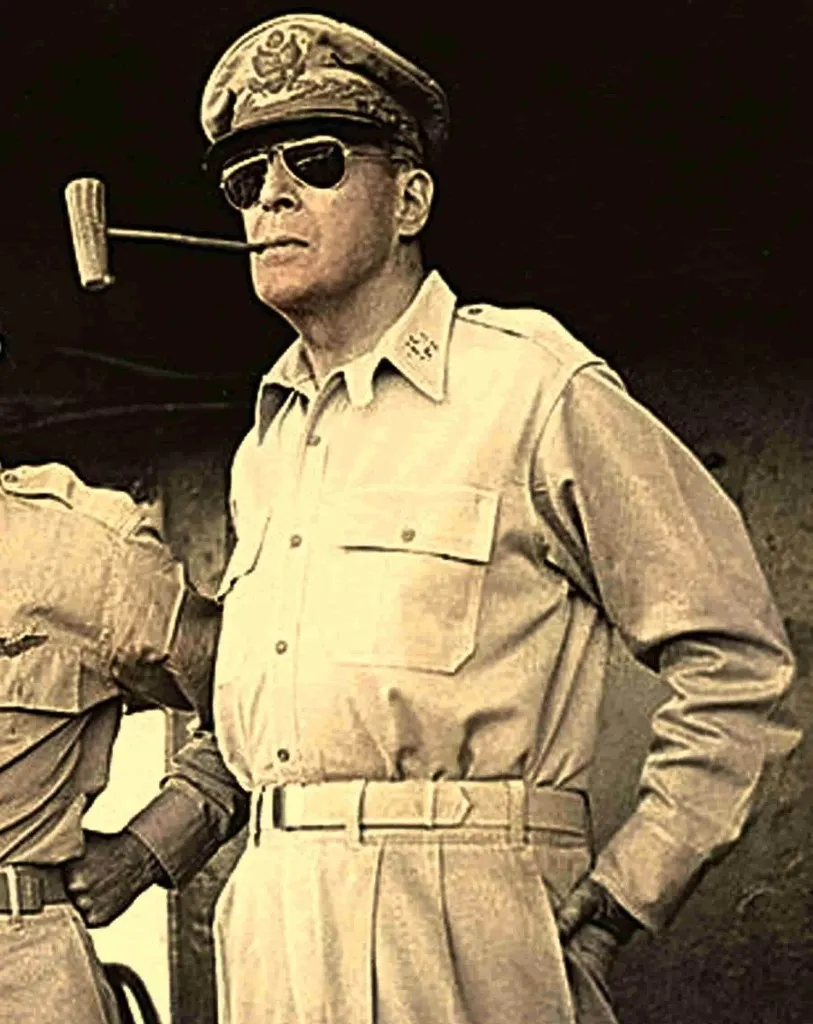 Photo: Douglas MacArthur, via i0.wp.com
The episode is remembered, correctly, as a triumph of civilian control. Truman held the line. MacArthur went home. The principle survived.
But the episode is less often examined for what it reveals about the psychological infrastructure that made Truman's decision so costly. MacArthur had been constructed, over decades, as something larger than a general. He was the defender of the Philippines, the liberator of the Pacific, the author of Japan's postwar constitution. He had been photographed wading ashore at Leyte Gulf — a landing staged, incidentally, for the cameras — and the image had become iconic before the water dried on his trousers.
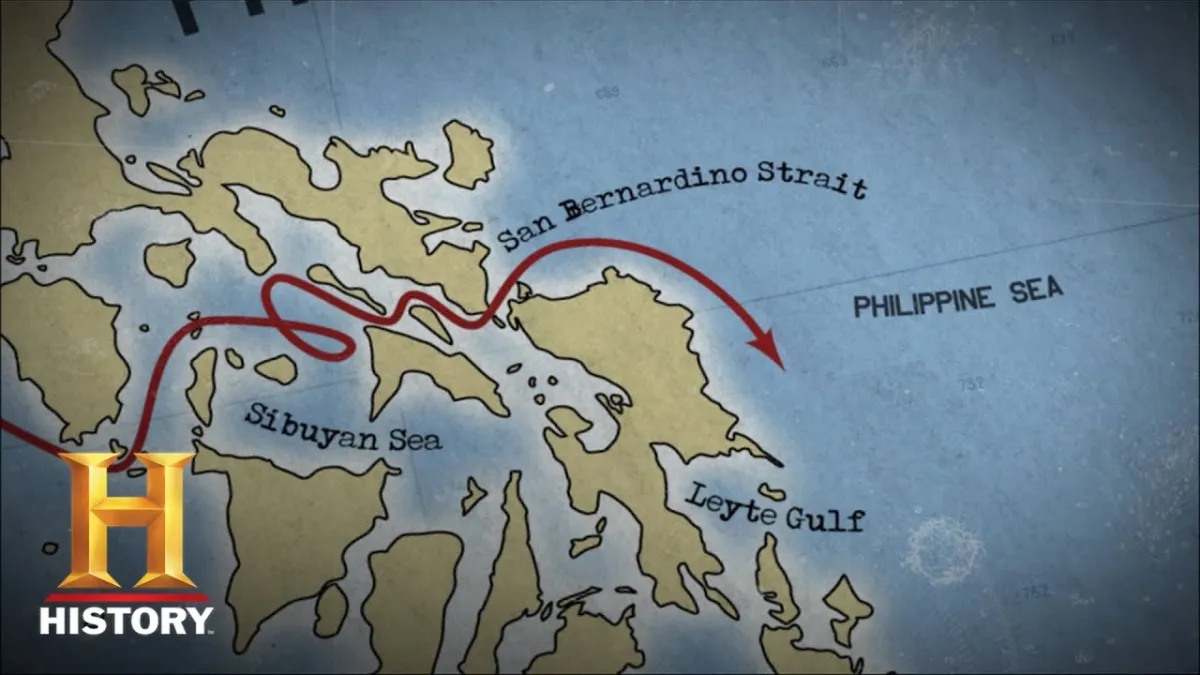 Photo: Leyte Gulf, via i.ytimg.com
By 1951, disciplining MacArthur did not feel to most Americans like a president managing a subordinate. It felt like a small man diminishing a legend. That feeling had nothing to do with the constitutional merits and everything to do with five thousand years of accumulated human psychology around military glory.
The Mechanism Itself
What is actually happening, across all these cases, is something researchers who study social psychology would recognize as a combination of attribution error and status elevation. When a general wins, we attribute the victory to the man rather than to the army, the logistics, the intelligence failures of the enemy, or the fortunate weather at a critical moment. We do this because human beings are story-creatures, and stories require protagonists, not systems.
Having attributed the victory to the man, we then elevate his status in ways that carry real institutional consequences. He is given access, deference, platforms, and public affection that insulate him from normal accountability. Subordinates stop delivering unwelcome information. Civilian officials stop issuing unwelcome orders. The feedback mechanisms that keep power honest begin to route around him, not through him.
The general rarely engineers this. More often, the republic does it to itself, driven by genuine gratitude and the very human need to have heroes.
The American Habit
The United States has a specific version of this problem rooted in its founding mythology. The republic was born from a war, led by a general who then became its first president. Washington's voluntary relinquishment of power is celebrated — rightly — as a foundational act of republican virtue. But it is celebrated so loudly, in part, because everyone understood it was not inevitable. The celebration is the acknowledgment of the risk.
Since Washington, the country has elected generals to the presidency with remarkable regularity: Jackson, Harrison, Taylor, Pierce, Grant, Hayes, Garfield, Benjamin Harrison, and Eisenhower, to name the most direct cases. This is not, by itself, evidence of pathology. Military service can produce genuine executive competence. But it reflects a persistent cultural equation between martial achievement and political legitimacy that civilian institutions have to actively resist rather than passively enjoy.
The resistance requires something most democracies find genuinely difficult: the willingness to discipline a popular hero at the peak of his popularity, before the hero becomes the story and the republic becomes a footnote to it.
The Whisper, Revised
Rome's solution — the slave in the chariot, the whispered reminder of mortality — was theatrical and ultimately insufficient. But it reflected a genuine institutional wisdom: the danger of the triumphant general is not that he wants to be a tyrant. Often he does not. The danger is that the people around him stop treating him like a citizen, and citizens stop expecting to be treated as his equals, and the republic quietly reclassifies itself as the backdrop to his story.
The corrective is not cynicism about military service or ingratitude toward genuine sacrifice. It is the maintenance of a clear-eyed insistence that accountability is not an insult to a hero — it is the condition that makes heroism possible within a republic rather than destructive to one.
Truman understood this. He paid a significant political price for understanding it. The fact that we remember his decision as correct, and not as an act of small-minded bureaucratic pique, is evidence that the whisper, however costly, still works.
The question, as always, is whether the next republic will pay what it costs to keep whispering.