The Accidental Sovereign: What History's Backup Leaders Do to the Systems That Weren't Built for Them
Photo: Ethan Doyle White, CC BY-SA 4.0, via Wikimedia Commons
The Accidental Sovereign: What History's Backup Leaders Do to the Systems That Weren't Built for Them
Political succession planning is, at its core, an exercise in controlled continuity. The designated heir is chosen, cultivated, and positioned precisely because those who hold power expect him or her to maintain the coalition, honor the debts, and perpetuate the system that produced the succession in the first place. The heir is, in a meaningful sense, a promissory note — evidence that the arrangement will outlast any single individual.
This is why the unexpected heir is so consistently disruptive. Not because such figures are uniquely reckless or uniquely principled — history produces both kinds in roughly equal measure — but because they arrive unburdened by the specific obligations that the system was designed to enforce. They did not make the promises. They did not receive the favors. They do not owe the debts. And systems built on promises, favors, and debts do not function well when the person at the top is not running the ledger.
Claudius and the Curtain
The story of Claudius's accession is almost too perfectly illustrative to be taken at face value, which is perhaps why ancient historians found it irresistible. According to Suetonius, when the Praetorian Guard murdered the Emperor Caligula in 41 A.D., they found his uncle Claudius hiding behind a curtain in the palace, certain he was about to be killed as well. The soldiers, rather than executing him, proclaimed him emperor — reportedly because they wanted an emperor rather than a return to the Senate, and Claudius was the available Julian.
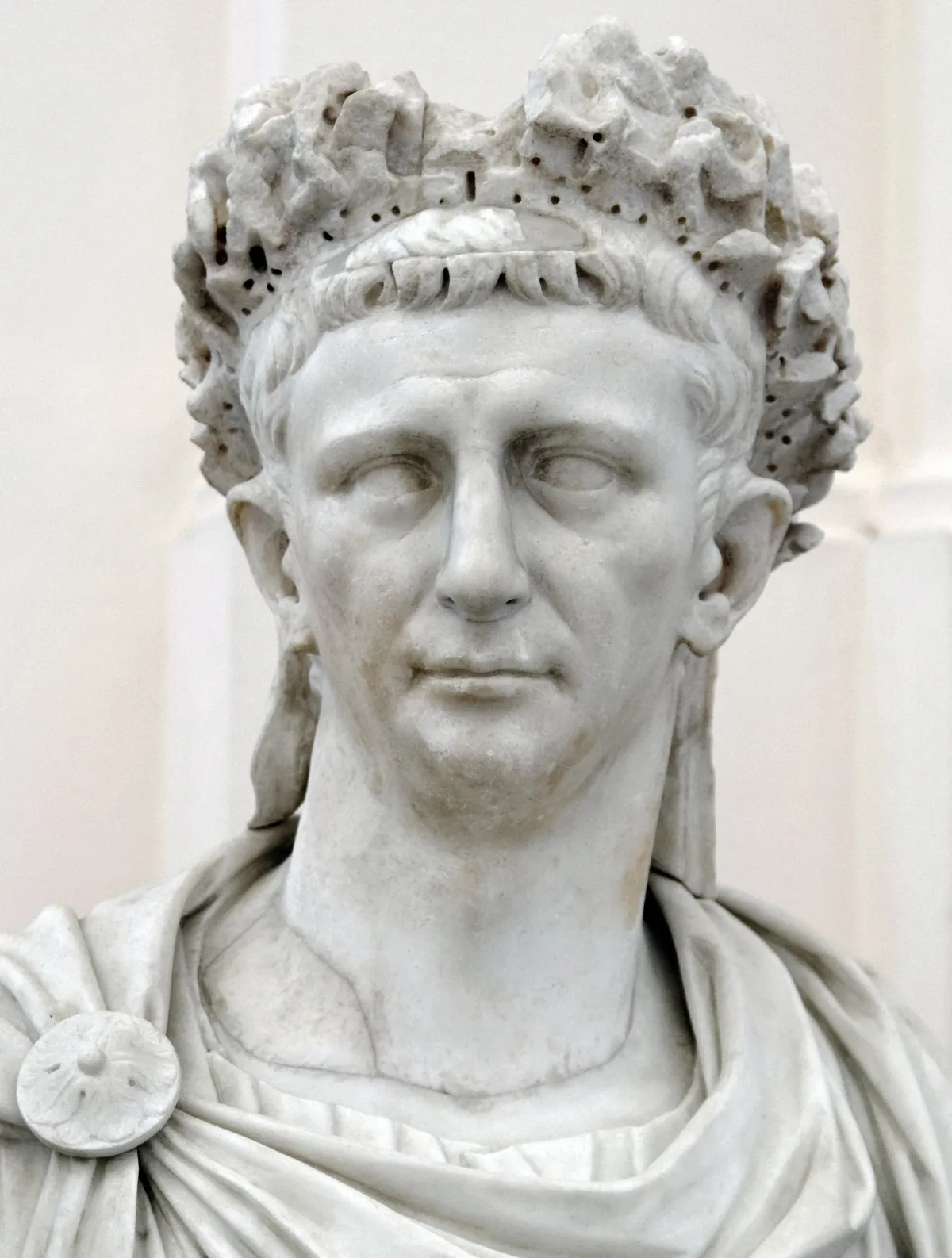 Photo: Claudius, via i.pinimg.com
Claudius had spent his adult life being treated as an embarrassment by his family. He limped. He stuttered. He was considered intellectually underpowered by a court that had not noticed he was spending his time writing serious historical scholarship. He had been kept from public office, excluded from the succession calculations, and regarded as a useful idiot at best and a dynastic liability at worst.
What his family and the court had not accounted for was that a man excluded from the system of patronage and obligation that governed Roman imperial politics had no particular reason to maintain it. Claudius proceeded to govern with a bureaucratic competence that irritated the Senate precisely because it bypassed senatorial authority in favor of professional administrators — a reform that was both effective and, from the perspective of the established aristocracy, completely illegitimate. He had not asked permission. He did not need to. He had not made their deals.
His reign ended badly, as most imperial reigns did, but its early years produced more functional administration than either of his immediate predecessors had managed. The man behind the curtain turned out to be dangerous not because he was ruthless but because he was unencumbered.
The Truman Case
Harry Truman is the American example that most cleanly illustrates the structural dynamic. He had been selected as Franklin Roosevelt's running mate in 1944 not because Roosevelt trusted him or intended to govern with him, but because the Democratic Party's various factions needed a compromise candidate who offended no one sufficiently to block the ticket. He was, in the explicit calculations of the men who selected him, a placeholder — someone acceptable enough to occupy the vice presidency without disturbing the arrangements Roosevelt had built over twelve years.
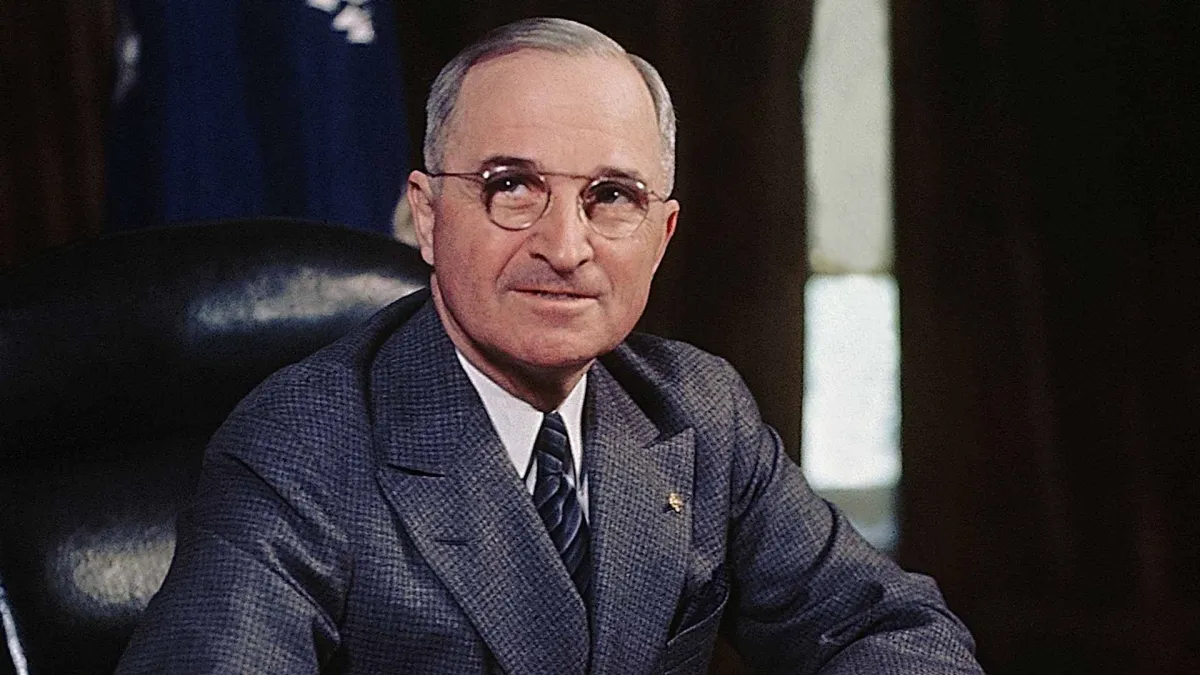 Photo: Harry Truman, via res.cloudinary.com
Roosevelt did not brief him on the Manhattan Project. He was excluded from major strategic planning sessions. He met with the president a handful of times during his eighty-two days as vice president. When Roosevelt died on April 12, 1945, Truman later said he felt as though "the moon, the stars, and all the planets" had fallen on him.
What followed was one of the most consequential runs of decision-making in American presidential history: the use of atomic weapons against Japan, the Marshall Plan, the Truman Doctrine, the desegregation of the military, the intervention in Korea. Historians argue about each of these decisions, but no serious analyst disputes that they collectively represented a dramatic departure from the coalition logic of the Roosevelt years. Truman alienated the Southern Democrats who had been essential to Roosevelt's coalition. He broke with party figures who expected continuity. He made decisions that the men who had engineered his vice presidential nomination would never have anticipated and would not have approved.
He could do this, in part, because he had not been the one to make the arrangements with those men. The ledger was not his.
The Pattern Across Cultures
The psychological consistency of the unexpected heir across very different cultural and political contexts suggests something deeper than coincidence. It suggests a structural feature of how power actually works — not as it is described in constitutions and succession laws, but as it operates in the actual relationships between people.
Every leader who reaches power through the expected path arrives with a set of obligations that are real, binding, and largely invisible to outside observers. The donors who were promised access. The factions that were promised appointments. The rivals who were promised deference in their domains in exchange for support in the campaign. These obligations do not appear in any official document. They are enforced not by law but by the threat of withdrawal — of money, of loyalty, of cooperation — from the people who provided them.
The unexpected heir has none of this. Which means the people who held power through those invisible obligations suddenly have no leverage. The currency they traded in — access, proximity, the ability to call in favors — has been, without warning, demonetized.
Some unexpected heirs use this freedom constructively, as Truman largely did. Others use it destructively, pursuing personal agendas unconstrained by any coalition logic. A few, like Claudius, do both in alternating chapters. But what they share is the freedom itself — and the disruption that freedom produces in systems that were not designed to accommodate it.
Gerald Ford and the Limits of the Pattern
Gerald Ford is a useful counterexample, or perhaps a complication. He was appointed vice president under the Twenty-Fifth Amendment after Spiro Agnew's resignation, then assumed the presidency when Richard Nixon resigned in August 1974 — making him the only person in American history to serve as president without having been elected to either the presidency or the vice presidency on a national ticket.
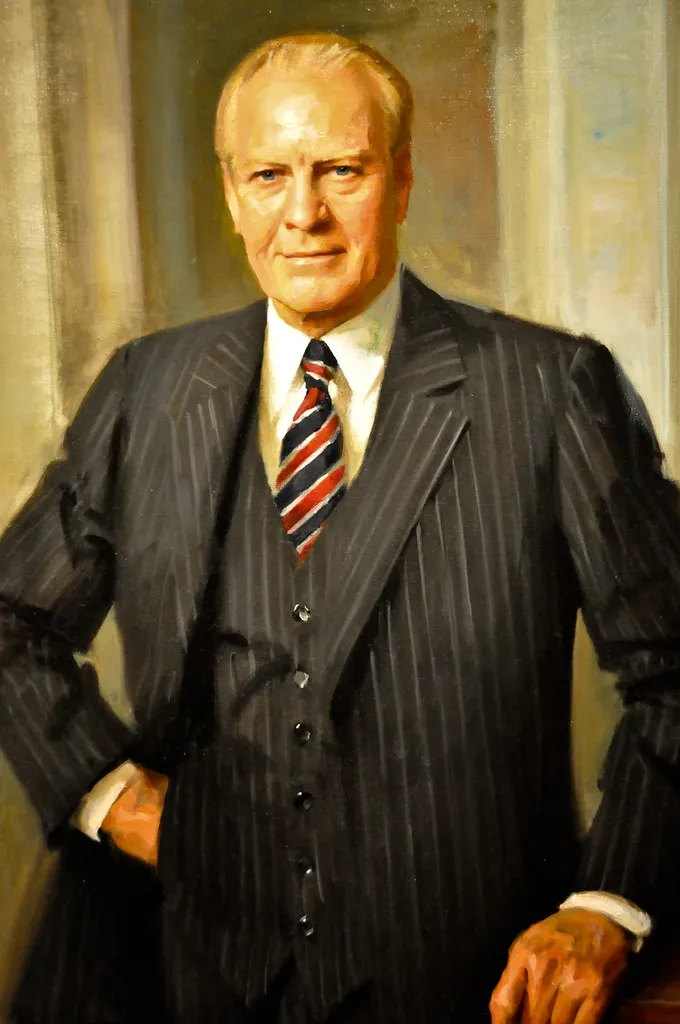 Photo: Gerald Ford, via c2.staticflickr.com
Ford was, in structural terms, the ultimate unexpected heir. And yet his presidency is remembered primarily for continuity rather than disruption — and, most controversially, for the pardon of Nixon, which many of his supporters experienced as a betrayal and which almost certainly cost him the 1976 election.
The Ford case suggests a refinement of the pattern: the unexpected heir who is deeply embedded in the existing system's social networks — Ford had spent twenty-five years in the House of Representatives — may lack the formal obligations of a designated successor while retaining the informal ones. He knew the people. He had the relationships. He was, in his own way, still running someone's ledger, even if it was not Nixon's.
The freedom of the unexpected heir is not purely structural. It is also psychological — and psychology is shaped by biography in ways that structural analysis cannot fully capture.
The System's Blind Spot
What this pattern reveals, ultimately, is a fundamental blind spot in how political systems manage succession. Succession planning focuses almost entirely on the question of who comes next. It focuses very little on the question of what that person owes, and to whom, and what happens when the answer is: nothing, and no one.
The Roman Empire never solved this problem. The British monarchy navigated it with varying success across centuries of unexpected accessions. American democracy has, on balance, been fortunate — the unexpected heirs have tended toward the competent rather than the catastrophic — but fortune is not a system.
Human psychology has not changed. The person who reaches the summit by accident, who was never supposed to stand there, who did not climb the path that everyone else climbed — that person will always see the view differently. They will always govern differently. And the system that was built to manage the designated heir will always, to some degree, fail to contain the one who arrived by surprise.
Five thousand years of records say so. The curtain is still there. So is whoever is hiding behind it.