When the People's Weapon Misfires: The Recurring Failure of Direct Democracy
Photo: Douglas W. Jones, CC0, via Wikimedia Commons
The Progressive Era reformers who introduced the initiative and referendum into American state constitutions were not naive. They understood that legislatures could be captured by concentrated interests, that representative democracy offered no guarantee against corruption, and that ordinary citizens needed some mechanism to act over the heads of politicians who had been purchased. The tools they designed were elegant in their simplicity: collect enough signatures, put the question directly to voters, let the majority decide.
What they did not fully reckon with — though the historical evidence was already available to anyone who had studied the Athenian assembly carefully — was that direct democracy does not eliminate the advantage of concentrated, organized interests over diffuse, disorganized publics. It relocates that advantage to a different arena. The question is no longer who controls the legislature. It is who controls the question, the timing, the framing, and the information environment in which millions of individual voters make their decisions. And the answer to that question, across more than a century of American initiative politics, has been remarkably consistent.
Athens and the Original Vulnerability
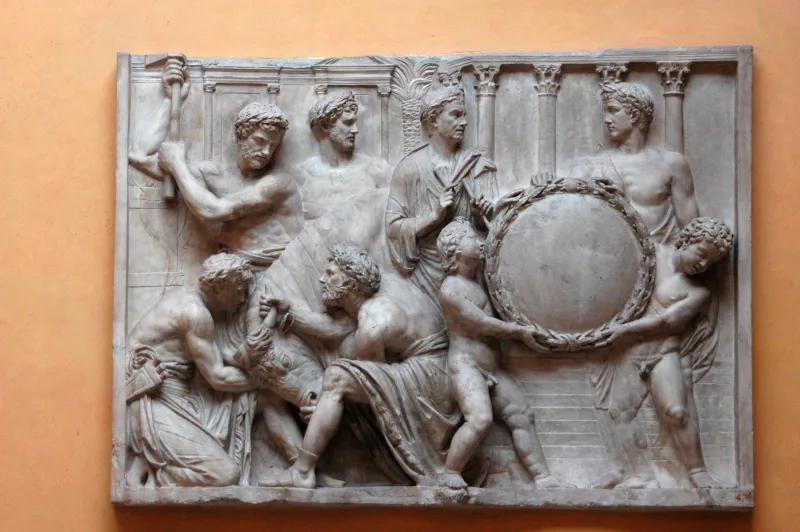
The Athenian assembly was the most direct form of mass democratic governance the ancient world produced, and it was also one of the most easily manipulated by skilled rhetoricians operating on behalf of concentrated interests. Thucydides documented with clinical precision how demagogues learned to exploit the assembly's structural weaknesses: the difficulty of presenting complex information to a large audience in real time, the emotional accessibility of simple arguments compared to complicated ones, and the tendency of fear to mobilize voters more reliably than hope or careful analysis.
The Sicilian Expedition of 415 BCE is the canonical example. Athenian voters, presented with a proposal to launch a massive military campaign against a distant and poorly understood enemy, voted overwhelmingly in favor — not because the strategic case was strong, but because the case against it was complex and the case for it was emotionally compelling. Nicias, who opposed the expedition and knew it was likely to fail, was drafted to lead it anyway. The assembly's enthusiasm was not dampened by his objections; it was inflamed by them, because his evident reluctance made the prize seem larger.
The psychological mechanism Thucydides identified — the asymmetric mobilizing power of simple emotional appeals versus complex analytical ones — is not a product of ancient Athenian culture. It is a feature of human cognition that behavioral research has confirmed repeatedly across every population in which it has been studied. It is as present in a California voting booth as it was in the Pnyx.
Proposition 13 and the Unintended Architecture
California's Proposition 13, passed in 1978 with nearly two-thirds of the vote, is the most consequential ballot initiative in American state history, and it illustrates the core vulnerability of direct democracy with unusual clarity. The measure, which capped property tax increases and required supermajority legislative votes to raise other taxes, was genuinely popular with the voters who passed it. The grievance it addressed — rapidly rising property taxes that were forcing longtime homeowners, particularly elderly ones on fixed incomes, from their homes — was real and widely shared.
What the measure's framers understood, and what its voters largely did not, was that its structural provisions would produce consequences far beyond property tax relief. By requiring supermajorities for tax increases, Proposition 13 effectively transferred budget authority from elected majorities to legislative minorities. By capping assessed values at purchase price, it created a system in which two neighbors owning identical properties might pay property taxes differing by a factor of ten, depending on when they bought. By treating commercial and residential property identically, it delivered the largest long-term benefits not to the elderly homeowners who were the measure's sympathetic face but to commercial real estate holders who could hold properties indefinitely and pass them between related entities without triggering reassessment.
The progressive reformers who invented the initiative process had hoped to give ordinary citizens a weapon against captured legislatures. In California, the initiative process itself became a captured institution — one in which the cost of qualifying a measure for the ballot, running a campaign, and defending against legal challenges had grown so large that only well-funded interests could reliably operate it. The people's weapon had been reverse-engineered.
The Insurance Industry's Masterclass
California's insurance reform battles of the late 1980s offer an even more explicit example of direct democracy being weaponized against the interests it nominally served. In 1988, consumer advocates qualified Proposition 103 for the ballot, a genuine reform measure that would have reduced auto insurance rates and increased regulatory oversight of the industry.
The insurance industry's response was not to defeat Proposition 103 — polling suggested that would be difficult. It was to flood the ballot with five competing insurance measures, each superficially similar to 103 but structurally designed to benefit insurers. The goal was not to win any particular measure but to create enough confusion that voters, unable to distinguish the genuine reform from its counterfeits, would vote no on everything or make choices that produced outcomes opposite to their intentions.
The technique worked well enough to be studied and replicated. It had a name in the industry: the 'confusopoly' strategy. Flood the zone with complexity, exploit the cognitive limits of voters making decisions about technical subjects under time pressure, and let the resulting confusion do the work that outright opposition could not. Thucydides would have recognized it immediately.
Brexit and the Limits of a Single Question
The 2016 Brexit referendum presented British voters with a question of almost incomprehensible complexity — the terms of the United Kingdom's relationship with a continental trading and political union built over four decades — in the binary form of a yes-or-no choice. The result was a majority for departure that contained within it a multitude of incompatible visions of what departure meant.
 Photo: United Kingdom, via wallpapercave.com
Leave voters who wanted a clean break from European regulations voted alongside Leave voters who wanted to retain single market access. Leave voters motivated primarily by immigration concerns voted alongside Leave voters motivated primarily by sovereignty arguments that had nothing to do with immigration. The referendum's single question aggregated these incompatible preferences into a single outcome without providing any mechanism for resolving the contradictions among them.
What followed was not the expression of a popular will but the discovery that no coherent popular will had been expressed — only a majority preference for change, combined with irreconcilable disagreements about what change meant. The concentrated interests that had funded and organized the Leave campaign had a clear vision of the outcome they wanted. The diffuse majority that voted for it did not share that vision; they shared only a feeling.
The Asymmetry That Never Changes
The common thread across these cases — and across the dozens of others that could be cited from American state politics alone — is an asymmetry that direct democracy's designers have consistently underestimated. Mobilizing a diffuse public around a complex policy question requires communicating accurate information about consequences that will only become apparent years after the vote. Mobilizing a diffuse public around a simple emotional narrative requires only that the narrative be emotionally compelling.
Concentrated interests are structurally better positioned to exploit this asymmetry than diffuse publics are to overcome it. They have the resources to develop and test messaging. They have the patience to wait for the right moment to act. They have the organizational capacity to operate the machinery of direct democracy — signature gathering, campaign management, legal defense — at industrial scale.
None of this means that direct democracy is worthless. It means that it is a tool, and like all tools, it is most useful to those who know how to use it. The Progressive Era reformers who put it in the constitutional toolkit were right that captured legislatures were a problem. They were wrong to assume that the tool they built would remain in the hands of the people they intended to empower.
The Athenians discovered the same thing. It took them roughly a century. American states have had somewhat longer to learn the lesson, and the learning is still incomplete.