The Capital That Would Not Concede: Sunk Costs, Sacred Centers, and the Cities That Outlived Their Purpose
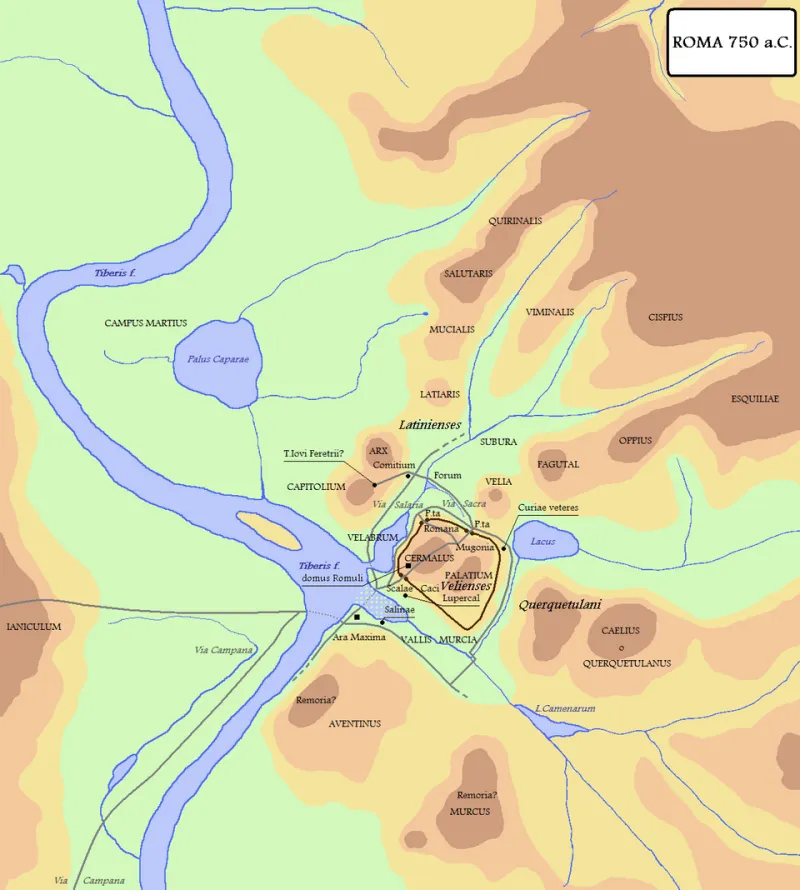
Photo: Cristiano64, GFDL, via Wikimedia Commons
In the behavioral economics literature, the sunk cost fallacy describes a cognitive pattern in which past investment distorts present decision-making — in which the resources already spent become a reason to continue spending, regardless of whether continuation makes rational sense. It is most often illustrated with examples of individuals: the gambler who keeps playing to recover losses, the investor who holds a declining stock because selling would mean admitting the original purchase was a mistake.
But the sunk cost fallacy is not merely an individual cognitive error. It is a collective one. And nowhere does it operate with more destructive force, or more historical consistency, than in the relationship between a civilization and its capital city.
The Thousand-Year Argument Against Retreat
Constantinople fell to Ottoman forces on May 29, 1453. By that point, the Eastern Roman Empire — the civilization whose continuation the city was understood to represent — had been contracting for the better part of six centuries. The territory it actually governed had shrunk to the city itself and a handful of surrounding districts. Its population had declined from perhaps half a million at its height to somewhere between fifty and one hundred thousand. Its navy was negligible. Its treasury was effectively empty.
And yet the city held. Not because holding was strategically rational — by any sober accounting, the resources expended defending Constantinople in its final decades could have been used to establish a more defensible position elsewhere, to fund alliances, to preserve institutions and knowledge in locations less vulnerable to siege. It held because Constantinople was the Eastern Roman Empire in a way that transcended geography. The city was not the seat of the empire. It was the proof of the empire's existence. To abandon it was not to make a strategic retreat. It was to concede that the empire had already ended, which was psychologically intolerable to the people whose identity depended on its continuation.
The final emperor, Constantine XI, died in the last hours of the siege rather than flee. This is remembered as heroism, and in certain respects it was. But it is also the terminal expression of an institutional psychology that had been making suboptimal decisions for generations because the alternative — acknowledging that the center had shifted — was cognitively unavailable.
Vienna's Long Performance
The Habsburg dissolution offers a less catastrophic but equally instructive case. The Austro-Hungarian Empire formally ended in November 1918. Vienna, which had been the administrative and cultural capital of a multi-ethnic empire of fifty million people, became the capital of a small German-speaking republic of fewer than seven million, roughly a third of whom lived in the capital itself — a grotesque disproportion that contemporaries immediately recognized as pathological.
But Vienna did not downsize its self-conception. The opera continued. The bureaucratic culture, trained for imperial administration, persisted in forms that made little sense for a small republic. The architectural scale of the Ringstrasse — built to project imperial magnificence — remained, dwarfing the governmental functions it now housed. Austrian politicians spent much of the interwar period debating whether to merge with Germany (the Anschluss question) in part because the idea of Vienna as the capital of a minor state was psychologically difficult to sustain. The city's symbolic infrastructure had been built for a different purpose, and the population found it easier to imagine expanding back toward imperial scale than to accept the actual dimensions of the polity they now inhabited.
The consequences of that particular failure of adjustment are well documented.
What Makes a City Sacred
The pattern is not limited to European empires. Beijing has served as China's capital under dynasties with radically different ethnic and ideological foundations, in part because the accumulated symbolic weight of the city — its cosmological positioning, its architectural assertions of centrality, its role in the rituals of legitimate governance — made the cost of moving the center higher than the cost of adapting the center to new rulers. Japanese forces occupying parts of China in the 1930s and 1940s established rival governments in Nanjing and elsewhere, but the symbolic contest over Beijing (then Beiping) never fully resolved in their favor, because the city's claim to centrality was older and more deeply embedded than any particular government's authority.
In the American context, Washington, D.C. has accumulated a version of this symbolic weight over roughly two centuries — a compressed timeline by historical standards, but the psychological mechanism is identical. The city was designed as a capital before it was a city, which means its entire physical and institutional existence is an argument about centrality. The monumental architecture, the museum complex on the Mall, the ritual geography of inauguration and state funeral — these are not incidental features. They are the infrastructure of sacred center-ness, and they exert the same gravitational pull on political imagination that Constantinople exerted on Byzantine identity.
The Sunk Cost in Real Time
The American federal government has been geographically and institutionally concentrated in Washington in ways that have become increasingly difficult to justify on purely functional grounds. The consolidation of regulatory, legislative, and administrative functions in a single metropolitan area creates vulnerabilities — to natural disaster, to political capture, to the specific cultural insularity that develops in any city that exists primarily to govern — that are well understood and periodically discussed.
The discussions rarely produce meaningful decentralization. This is not because the arguments for concentration are overwhelming. It is because Washington, like Constantinople in its later centuries, has become so thoroughly identified with the idea of federal authority that relocating functions feels, at a psychological level, like conceding that the center is movable — which feels uncomfortably close to conceding that it might be unnecessary.
This is the sunk cost operating at civilizational scale. The investment in the city as symbol is so large, so deeply embedded in institutional identity and political ritual, that the cost of acknowledging its contingency exceeds what the political imagination can easily absorb.
The Cities That Adapted
Not every symbolic capital ends in a siege or a slow institutional dissolution. Some manage the transition. Rome itself, after the western imperial collapse, became the seat of a different kind of universal authority — the papacy — and preserved its claim to centrality by changing what centrality meant. The city survived not by defending a fixed identity but by finding a new institutional purpose capacious enough to justify its continued symbolic primacy.
The historical cases in which cities successfully navigate the loss of their original rationale share a common feature: the transition was acknowledged rather than denied. The sunk cost was written off, the new purpose was named, and the institutional energy that had been devoted to defending the old identity was redirected toward constructing the new one.
This requires a kind of collective honesty that is genuinely difficult for populations whose identity is bound up in the city's symbolic claims. It requires admitting that the center shifted — which means admitting that the investment in the old center, however enormous, cannot be recovered by continuing to invest in it.
Five thousand years of cities suggest that this admission, when it comes, almost always comes too late. The question is not whether it comes. The question is how much is spent on the siege before it does.