The Mole and the Movement: How Infiltration Turns Reform Coalitions Against Themselves
The most dangerous person in any reform movement is not the opponent outside it. History is unambiguous on this point. External opposition — government repression, hostile press, organized counter-movements — has rarely been sufficient on its own to destroy a coalition that maintained internal cohesion. What destroys movements is what happens to trust when members begin to suspect that the person sitting beside them in the meeting is writing reports about what was said.
This is not a modern discovery. It is one of the oldest techniques in the management of political opposition, and its mechanics have remained essentially unchanged across every era in which it has been documented. The specific technology varies — informants' handwritten letters to magistrates in ancient Rome, telegrams to J. Edgar Hoover's Washington, encrypted messages to contemporary fusion centers — but the underlying psychology is identical. Human beings, when they cannot identify the source of a threat, begin to treat every member of their group as a potential source. Once that process begins, the group's capacity for collective action collapses far more efficiently than any external pressure could achieve.
The Abolitionist Penetration
The antebellum abolitionist movement was, from the perspective of Southern slaveholding interests and their Northern allies, an existential threat that required active management. The response was not limited to legal suppression, though that was attempted. It included the systematic placement of informants within abolitionist networks, the interception of correspondence, and the cultivation of members whose financial or personal vulnerabilities made them susceptible to coercion.
The effects were felt less in the intelligence gathered — most of what informants reported was already available to anyone who read abolitionist newspapers — than in the atmosphere their presence created. Organizers began to hedge their communications. Meetings became smaller and more selective. New members were regarded with suspicion that was difficult to dispel because the criteria for suspicion were necessarily vague. The movement did not collapse, but it contracted, and the contraction was not primarily a response to external pressure. It was a response to the internalized possibility of betrayal.
Frederick Douglass, who understood the mechanics of this pressure better than most, wrote with characteristic precision about the problem: secrecy was necessary for the underground railroad's survival, but secrecy also meant that the network could never fully verify the loyalty of its participants. The result was a permanent condition of managed uncertainty that imposed real costs on organizing capacity.
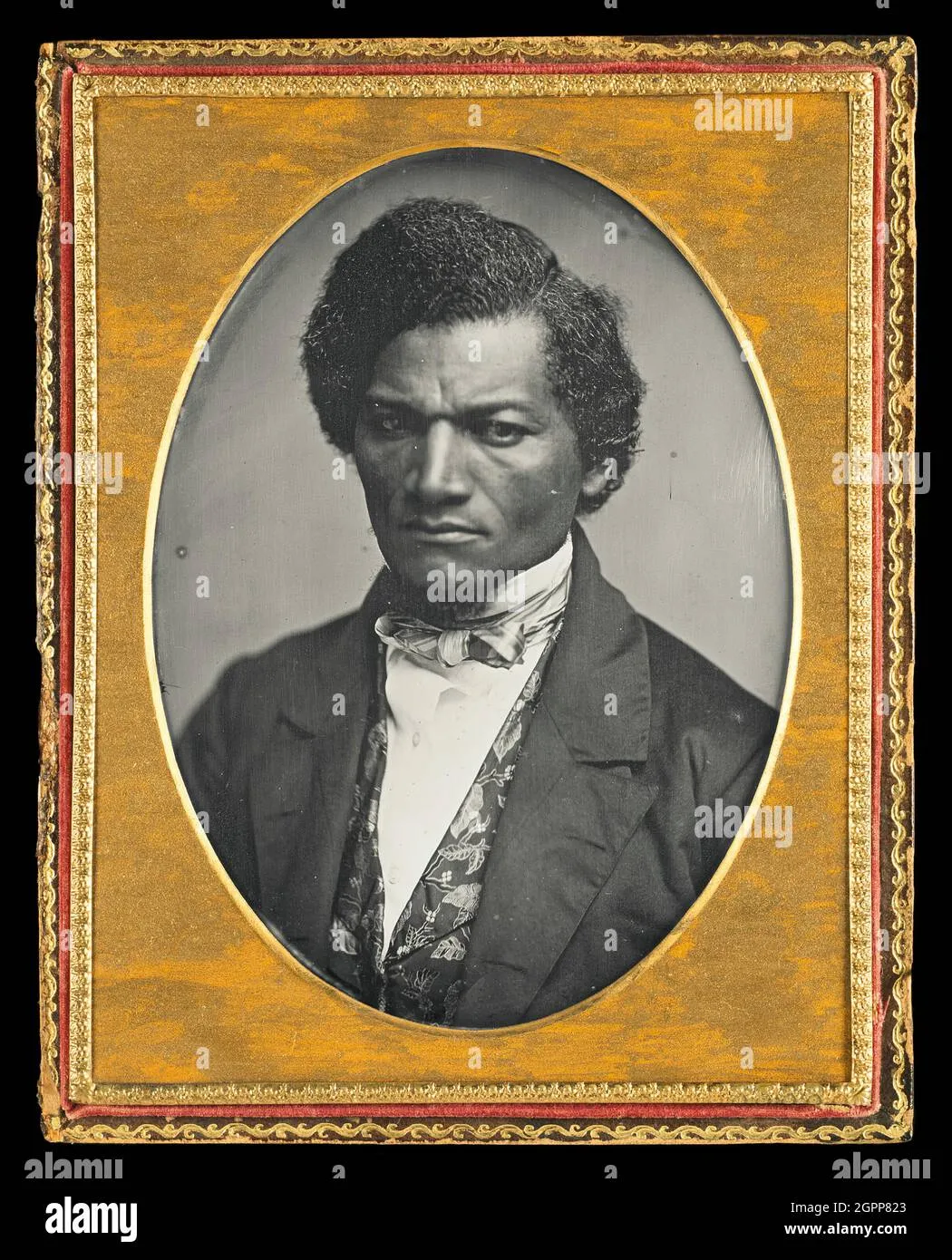 Photo: Frederick Douglass, via c8.alamy.com
COINTELPRO and the Science of Manufactured Paranoia
The FBI's Counter Intelligence Program, active from the mid-1950s through the early 1970s, represents the most thoroughly documented example of systematic movement infiltration in American history, and it repays close study precisely because the documentary record is so extensive. What the files reveal is not a program primarily concerned with gathering intelligence — though intelligence was gathered. It was a program explicitly designed to use infiltration as a weapon against organizational cohesion.
The operational logic was stated with unusual candor in internal Bureau memoranda. The goal was to 'expose, disrupt, misdirect, discredit, or otherwise neutralize' targeted organizations. The specific techniques included planting forged documents designed to suggest that one leader was informing on another, sending anonymous letters to movement members accusing colleagues of cooperation with authorities, and ensuring that genuine informants behaved in ways calculated to maximize suspicion without necessarily being identified.
The results were measurable and devastating. In the Student Nonviolent Coordinating Committee, the Black Panther Party, the American Indian Movement, and dozens of other organizations, internal purges consumed organizational energy that would otherwise have been directed outward. Leaders who had worked together for years found themselves unable to trust one another. Meetings became consumed with the identification of suspected informants — a process that, by its nature, could never be conclusive and therefore never ended.
The historical irony is that many of the people accused during these internal purges were not informants at all. The suspicion itself, not the informant's actual presence, was the operational objective. COINTELPRO succeeded not because it placed effective spies in every meeting room, but because it ensured that every meeting room felt as though it might contain one.
The Mechanism Is Ancient
The Romans called this technique delatores — the use of informers — and they understood its political utility so clearly that successive emperors built formal systems for encouraging denunciation. But the more sophisticated practitioners recognized what the FBI's operational planners would rediscover two millennia later: the informant's report is less valuable than the informant's effect on the group's internal culture.
Tacitus documented how Tiberius's systematic use of informers transformed Roman public life not primarily by identifying conspirators but by making the expression of any potentially dangerous opinion socially catastrophic. The result was not a population of loyal subjects but a population of performatively loyal subjects whose actual opinions had simply gone underground — and whose capacity for collective political action had been thoroughly disabled.
The psychological mechanism is straightforward. Human beings are capable of organizing collectively only when they can extend sufficient trust to coordinate their actions. Trust requires the ability to model other people's intentions with reasonable accuracy. When the possibility of betrayal becomes salient — when any member of the group might be reporting to an adversary — the cognitive load of that uncertainty consumes resources that would otherwise be available for coordination. The group does not stop functioning immediately. It slows, becomes more cautious, invests more energy in internal policing and less in external organizing, and eventually reaches a point where the overhead of managing internal suspicion exceeds the capacity for collective action.
The Private Sector Playbook
Government agencies have not been the only practitioners. The labor movement of the late nineteenth and early twentieth centuries faced systematic infiltration by private detective agencies — most famously the Pinkerton National Detective Agency — whose operatives joined unions, attended meetings, reported on membership, and in some documented cases actively provoked violence to provide justification for employer or government response.
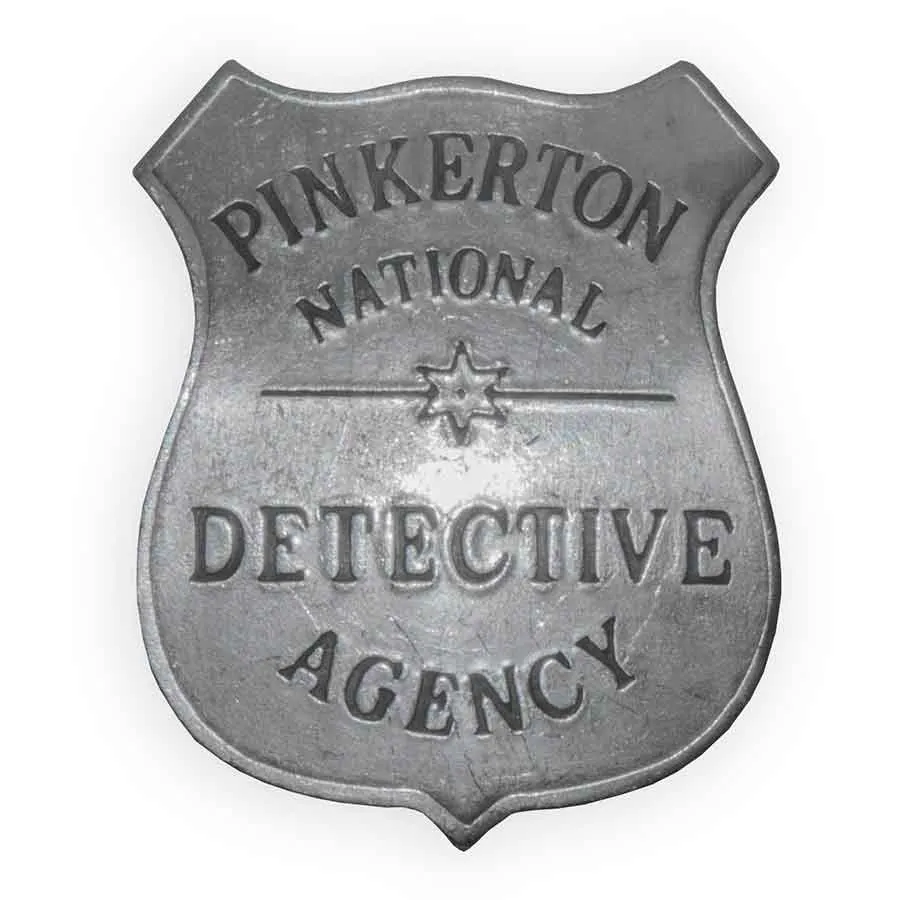 Photo: Pinkerton National Detective Agency, via westernstageprops.com
The technique was so effective that it became a standard tool of corporate labor relations. The La Follette Civil Liberties Committee, investigating labor espionage in the late 1930s, found that nearly every major American corporation had employed informants within its workforce. The effect on union organizing was precisely what the historical pattern predicts: not the elimination of organizing, but the imposition of a permanent tax on trust that made organizing slower, more expensive, and more fragile.
What Survives
The reform movements that proved most resilient against infiltration share a common characteristic that is worth examining carefully. They were not the movements that achieved perfect security — no movement operating in public can achieve that. They were the movements that built organizational structures capable of functioning despite infiltration, because they had reduced their dependence on the kind of centralized trust that informants could most effectively undermine.
The Montgomery Bus Boycott succeeded in part because its organizing structure was distributed enough that the compromise of any single node could not disable the whole. The network of Black churches, carpools, and neighborhood organizations was too redundant to be decapitated by the exposure of any individual participant.
This is the lesson the historical record offers, and it is not a comfortable one. The question for any reform coalition is not whether it will face infiltration — the pattern across five thousand years of political history suggests it will. The question is whether its structure can absorb the damage that infiltration inevitably produces, and whether its members can maintain enough functional trust to keep organizing even when certainty about loyalty becomes impossible. That is a harder problem than identifying the informant. It always has been.