The Last City Standing: When Geography Becomes National Mythology
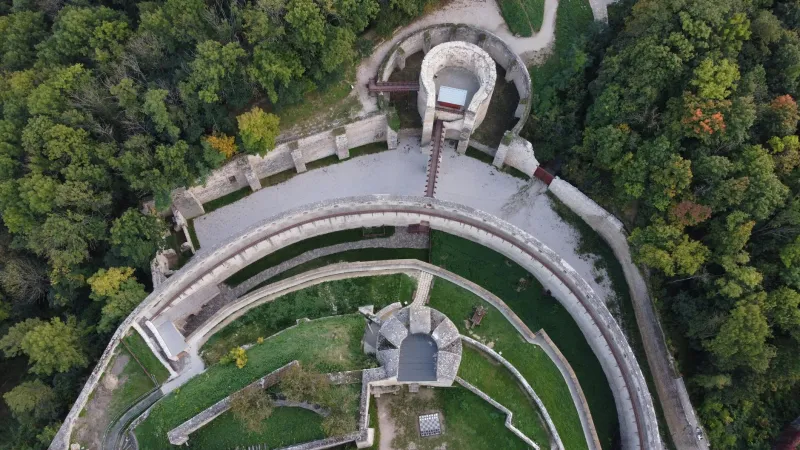
On May 2, 1453, Sultan Mehmed II stood before the walls of Constantinople and made a calculation that would echo through centuries. The city had no strategic value worth the blood it would cost to take. Its population had dwindled to perhaps 50,000 souls rattling around in a metropolis built for half a million. Its defenses were crumbling, its treasury empty, its empire reduced to little more than the city itself.
But Constantinople was never really about Constantinople. It was about the idea of Rome, the symbol of Christian dominion, the last physical manifestation of an empire that had ruled the known world for over a thousand years. When the Ottomans finally breached those walls, they weren't just conquering a city—they were killing a civilization's last sacred space.
This transformation of geography into mythology represents one of history's most predictable and destructive patterns. When empires begin to fail, they don't retreat strategically—they pick a city, any city, and declare it the place where their civilization will make its final stand.
The Arithmetic of Symbols
The selection process follows a consistent logic that has nothing to do with military sense. Leaders facing civilizational collapse need a location that can bear the weight of everything their society claims to represent. The city must be famous enough that its fall will register as genuinely apocalyptic, defensible enough that the fight will last long enough to feel epic, and isolated enough that retreat becomes impossible.
Carthage fit the formula perfectly. By 149 BCE, the Punic Wars had already demonstrated Rome's military superiority beyond any reasonable doubt. Carthage posed no meaningful threat to Roman power—it was a trading city surrounded by hostile territory, cut off from its former empire, reduced to paying tribute to its conquerors. But Rome needed more than victory; it needed the complete psychological destruction of its greatest rival.
The Third Punic War wasn't about strategy—it was about erasing the very concept of Carthaginian civilization from human memory. When Roman forces finally breached the city after a three-year siege, they didn't just kill the defenders. They demolished every building, sold the survivors into slavery, and allegedly sowed the ground with salt to ensure nothing would ever grow there again. The message was clear: this is what happens to civilizations that challenge Rome.
The Modern Template
Twentieth-century warfare perfected the symbolic city concept while making it exponentially more deadly. During World War II, both sides repeatedly chose to fight for cities that had become more important as symbols than as strategic objectives. Stalingrad was a perfect example: a industrial city that happened to bear Stalin's name, transforming what should have been a tactical decision into an ideological imperative for both Hitler and Stalin.
The battle consumed over two million casualties and lasted five months, far longer than any rational strategic assessment would have justified. But neither leader could afford to lose "their" city. For Hitler, Stalingrad represented the success of his entire Eastern campaign; for Stalin, it was literally his namesake. The city became a proxy for the war itself, and the war became a proxy for the conflict between fascism and communism.
Vietnam provided an even clearer example of how symbolic cities can distort strategic thinking. By 1975, Saigon had long ceased to matter militarily—the war was already lost, and everyone involved knew it. But American policymakers couldn't simply abandon the city that had served as the symbol of their entire Southeast Asian project for two decades.
The result was the chaotic evacuation of April 1975, with helicopters lifting desperate refugees from embassy rooftops while North Vietnamese forces closed in. The images became iconic not because they represented military defeat, but because they showed the collapse of America's symbolic investment in a single city. Saigon's fall meant more than losing a war—it meant admitting that the entire domino theory had been built on illusion.
The Psychology of Last Stands
What drives leaders to make these catastrophic symbolic investments? The pattern suggests a consistent psychological mechanism: when empires begin to fail, their rulers face a choice between admitting weakness and doubling down on strength. The symbolic city offers a third option—transforming inevitable defeat into heroic mythology.
This explains why these battles are almost always fought far longer than military logic would suggest. Leaders aren't trying to win anymore; they're trying to create a story that will outlast their defeat. The city becomes a stage for performing civilization's final act, complete with heroic defenders, barbarous invaders, and tragic but noble sacrifice.
The pattern repeats because it serves the psychological needs of both rulers and ruled. Citizens facing civilizational collapse need to believe their society is worth dying for, and nothing makes that case quite like a dramatic last stand in a place everyone recognizes. The city provides a focal point for collective identity at precisely the moment when that identity is most threatened.
The American Exception?
The United States has largely avoided the symbolic city trap, partly because its geographic scale makes any single city less psychologically central. But recent conflicts suggest American leaders aren't immune to the pattern. The prolonged battles for Fallujah during the Iraq War followed familiar logic: a city of minimal strategic importance became a symbol of American resolve, requiring multiple costly assaults to capture and hold.
More concerning is the domestic tendency to transform American cities into symbolic battlegrounds during moments of political crisis. When protesters occupied cities like Portland or Seattle, political rhetoric quickly escalated to treat these events as existential threats to American civilization itself. The cities became proxies for larger ideological conflicts, with both sides investing them with far more symbolic weight than their actual importance warranted.
The Inevitable Collapse
What history teaches about symbolic cities is ultimately pessimistic: they almost never save the civilizations that create them. Constantinople fell, Carthage was destroyed, Saigon was abandoned, and Berlin was divided. The symbolic investment that makes these cities seem so crucial also makes their eventual loss far more psychologically devastating than necessary.
The pattern persists because human beings need geography to anchor their abstract loyalties. We can't fight for "democracy" or "Christianity" or "the American way of life" in the abstract—we need a physical place that represents these concepts. The city provides that anchor, but it also provides a single point of failure that enemies can exploit.
For contemporary Americans, the lesson is both historical and immediate. As political polarization intensifies and different groups invest different cities with symbolic importance, the temptation to treat urban conflicts as civilizational battles will only grow. History suggests that once geography becomes mythology, strategic thinking becomes nearly impossible—and the costs become far higher than any city is actually worth.