The Hero They Built to Destroy: How Democracies Manufacture Military Gods and Then Sacrifice Them
There is a particular kind of political theater that democracies have staged, with remarkable consistency, for at least twenty-five centuries. A society encounters a threat it cannot easily name or measure. Anxiety pools in the population. And then, as if by instinct, a figure emerges from the military — decorated, confident, projecting the certainty that civilian politics conspicuously lacks. The public does not simply admire this figure. It needs him. It builds a story around him that no human being could actually inhabit. And then, when the fear subsides or the myth grows too large to coexist with democratic institutions, the same society that manufactured the hero turns on him with a ferocity that seems, on the surface, disproportionate.
The generals change. The psychology does not.
Athens Built Alcibiades. Then Athens Destroyed Him.
Alcibiades was not merely a general. He was a mirror. When Athens needed boldness, he embodied audacity. When the city needed charm, he was magnetic. When it needed a scapegoat, he was conveniently absent. His career traces the full arc of the democratic hero cycle with unusual clarity: extraordinary early elevation, a mission of almost theatrical ambition (the Sicilian Expedition of 415 BCE), accusations of sacrilege leveled at precisely the moment his enemies needed leverage, exile, return, exile again, and finally assassination in a foreign country.
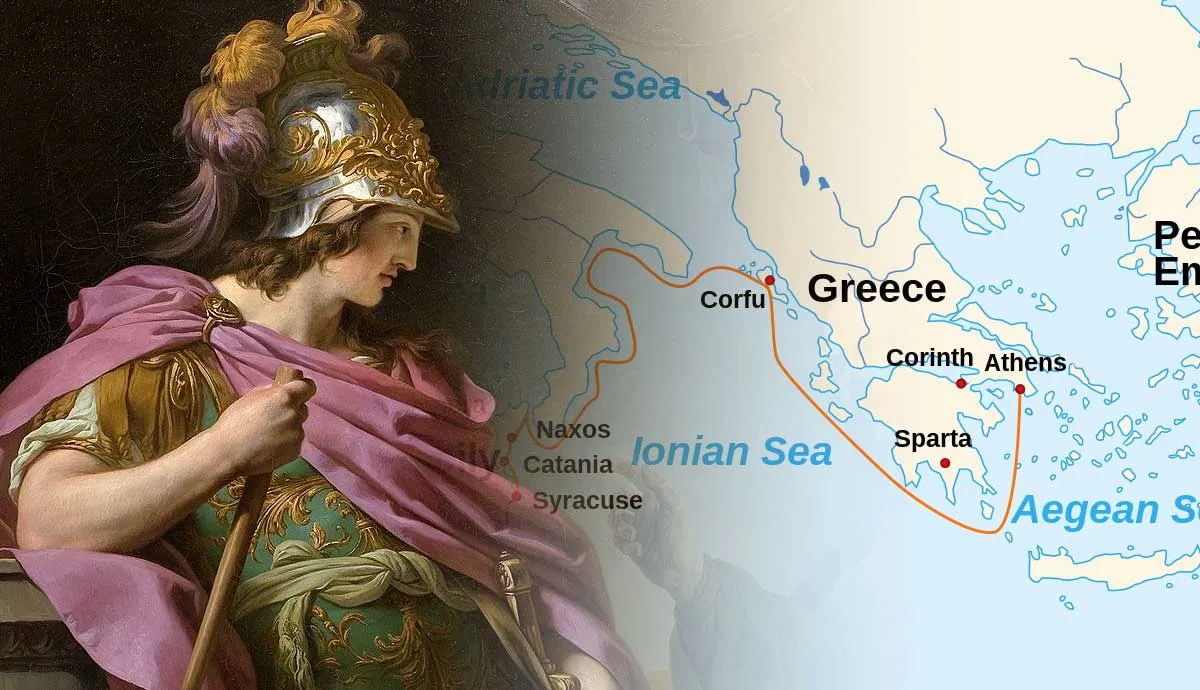 Photo: Alcibiades, via cdn.thecollector.com
Thucydides, who watched all of this unfold, drew a conclusion that has lost none of its sharpness: the Athenians feared his personal ambition while simultaneously relying on his personal genius, and the contradiction was never resolved — it simply detonated. What Athens could not tolerate was the gap between the man it had created and the institutions it needed to preserve. When those two things came into conflict, the institution won. The man paid.
This is not a story about a bad general or an overreaching politician. It is a story about what democratic populations do when the symbol they have constructed stops being useful and starts being threatening.
The Roman Variation
Rome refined the cycle. The republic had a formal mechanism — the triumph — for elevating military commanders to something approaching divine status, and an equally formal set of anxieties about what happened when those commanders returned with their armies. The solution was ritual humiliation built into the celebration itself: a slave rode behind the triumphant general whispering memento mori, reminding him that he was mortal. The republic understood, at an institutional level, that the hero had to be symbolically cut down even at the moment of his greatest glorification.
When the ritual failed — when Sulla marched on Rome, when Caesar crossed the Rubicon — it was not because the generals were uniquely ambitious. It was because the republic had stopped being able to contain the myths it kept generating. The fear that created the need for military saviors had outpaced the institutions designed to manage them.
MacArthur and the American Version
Douglas MacArthur understood, with a sophistication that bordered on genius, how to inhabit a myth. His theatrical returns, his biblical cadences, his deliberate cultivation of an image that placed him slightly outside the normal chain of institutional accountability — none of this was accidental. He had studied the psychology of democratic publics and concluded, not unreasonably, that Americans in the early Cold War were hungry for a figure who projected absolute certainty.
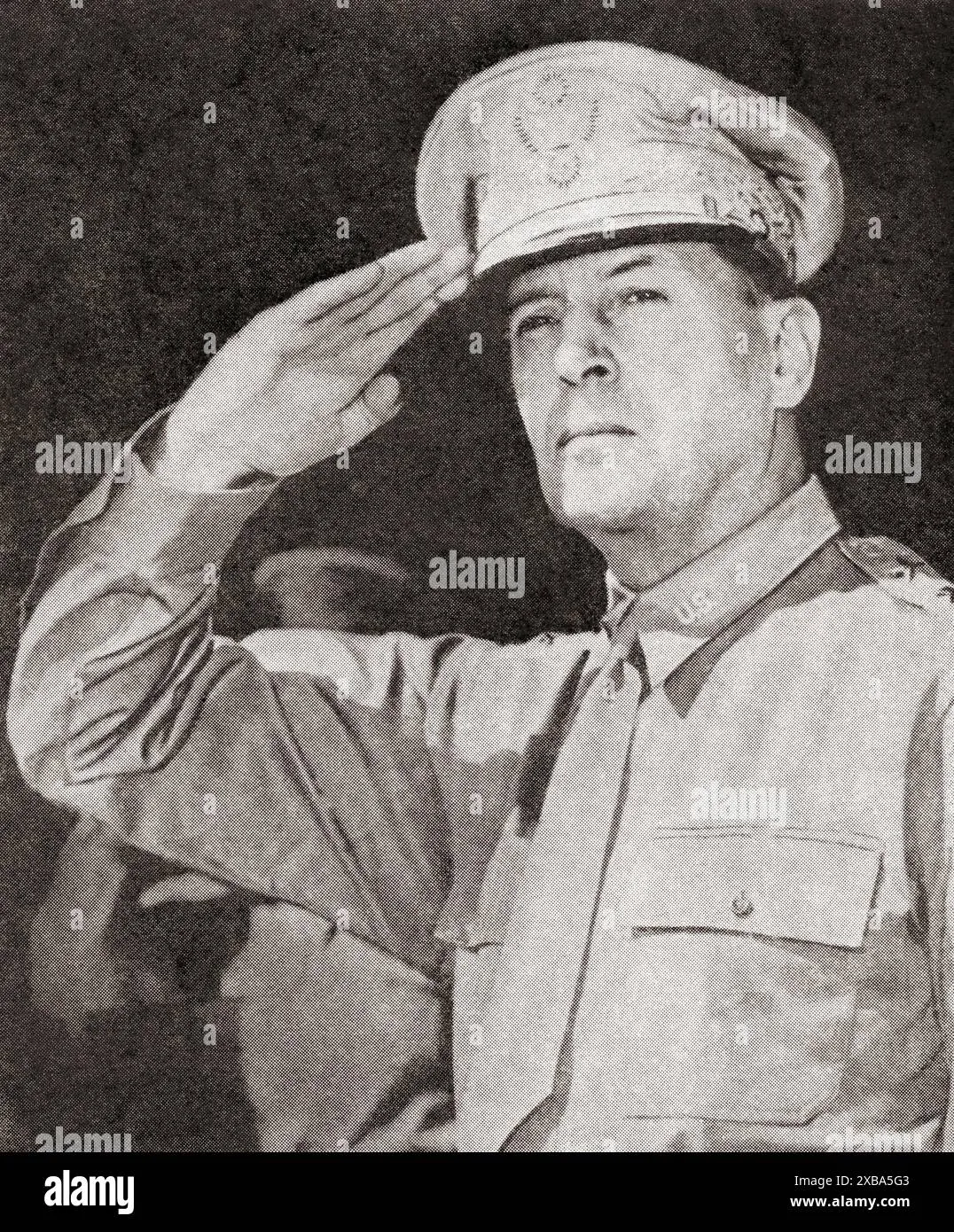 Photo: Douglas MacArthur, via c8.alamy.com
Harry Truman's dismissal of MacArthur in April 1951 produced a public reaction that is instructive precisely because it was so intense and so short-lived. Gallup polling at the time showed the general with approval ratings that dwarfed the president's. Congress invited him to address a joint session. The speech — old soldiers never die, they just fade away — was designed for permanent mythology.
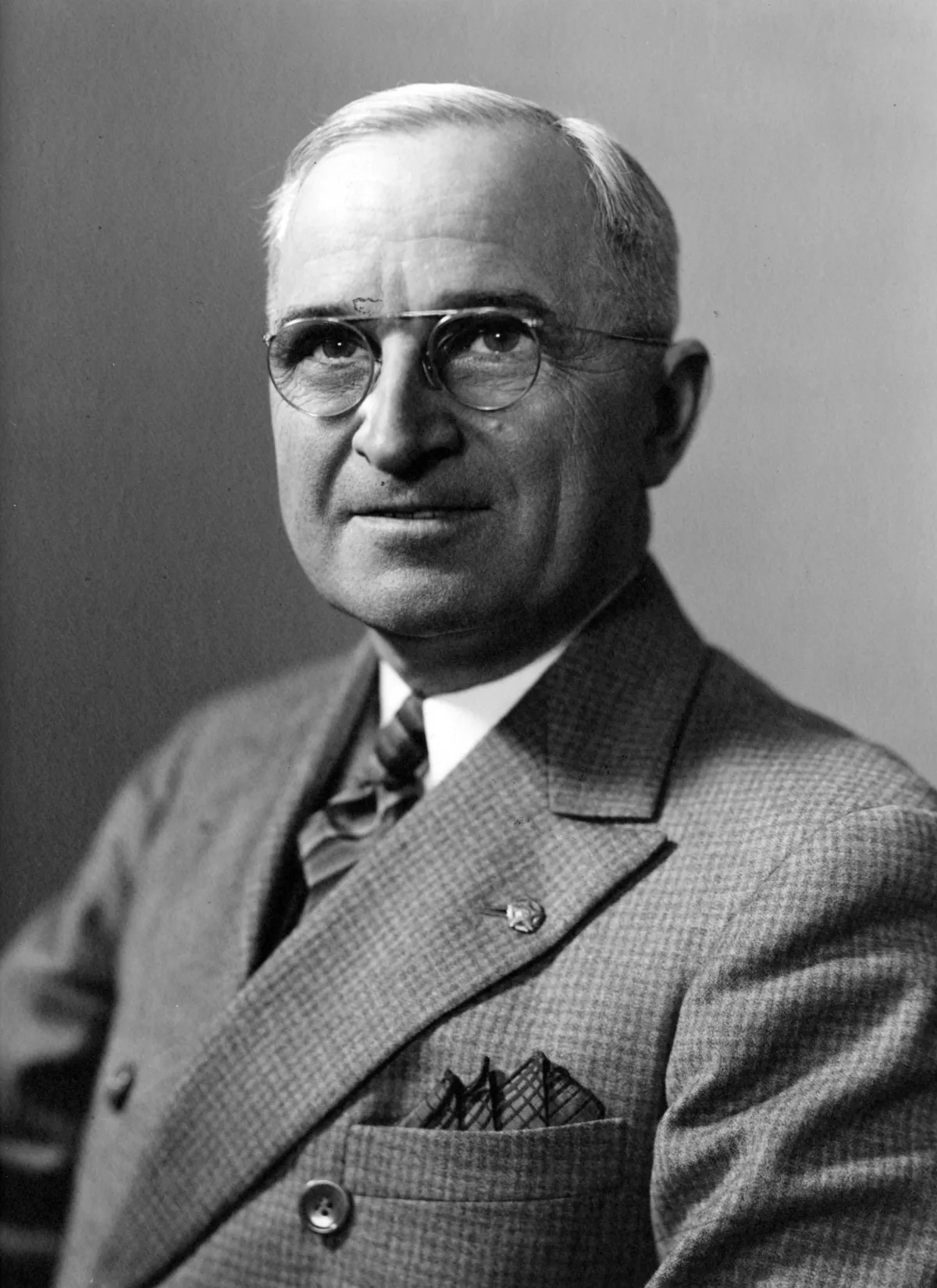 Photo: Harry Truman, via i0.wp.com
And yet he faded away. The myth, deprived of an active threat to sustain it, collapsed with surprising speed. By the time the 1952 Republican primary arrived, MacArthur's moment had passed. Eisenhower — a different kind of military figure, one who had carefully subordinated his persona to institutional authority — won the nomination and the presidency. The public had not changed its appetite for military credibility. It had simply recalibrated what kind of military credibility it needed.
Truman, for his part, understood exactly what he was doing. He was not firing a general. He was performing the ritual that democratic republics must periodically perform: the symbolic reassertion that the civilian institution outranks the myth.
What the Public Is Actually Voting For
It is tempting to analyze these episodes as stories about individual ambition — and individual ambition is certainly present. But the more durable pattern concerns the populations, not the generals. What voters and citizens are responding to, in every era, is a specific kind of fear: the fear that the normal mechanisms of governance are inadequate to the threat at hand.
This fear is not irrational. Sometimes it is entirely correct. The Athenians facing Sparta, the Romans facing Carthage, Americans facing the Soviet Union — these were genuine existential pressures, and the desire for a figure who seemed equal to them was psychologically coherent. The problem is that the same cognitive mechanism that generates the hero also generates the dependency. Once a population has outsourced its collective courage to a symbol, it becomes very difficult to take that symbol back without a crisis.
The crisis is, in a sense, the point. The disgrace, the exile, the congressional hearing, the dismissal — these are not failures of the democratic process. They are the democratic process working as designed, if somewhat late. The institution reasserts itself. The myth is punctured. The population, briefly embarrassed by the intensity of its own devotion, recalibrates.
The Pattern Continues
Contemporary American politics has not outgrown this cycle. The specific figures change with each generation's particular anxieties, but the underlying mechanism — collective fear generating demand for a mythologized protector, followed by the inevitable collision between the myth and institutional limits — remains entirely intact.
Five thousand years of recorded history offer a fairly consistent verdict: democracies do not manufacture military heroes because they are naive. They do it because the anxiety is real, the need is genuine, and the human brain has not developed a more sophisticated response. The generals are symptoms. The fear is the condition. And the ritual sacrifice that ends each cycle is less about punishing ambition than about reassuring the public that the institution, however imperfect, is still the one holding the sword.