Five Thousand Years History doesn't repeat. People do.

Five Thousand Years

History doesn't repeat. People do.


Latest Articles

When the Watchers Become the Watched: How Intelligence Services Always End Up Controlling Their Masters
Politics

When the Watchers Become the Watched: How Intelligence Services Always End Up Controlling Their Masters

From Venice's shadowy Council of Ten to modern intelligence bureaucracies, history reveals a consistent pattern: secret services created to protect the state eventually learn to manipulate it. The psychology of institutional secrecy hasn't changed in five centuries, only the technology has improved.

The Dictator Who Went Home: Why Cincinnatus Terrifies Every Modern Politician
Politics

The Dictator Who Went Home: Why Cincinnatus Terrifies Every Modern Politician

In 458 BC, Roman dictator Cincinnatus saved the republic and returned to his farm in sixteen days. Modern leaders can barely leave office after term limits expire. The psychology of power hasn't changed — but the structures that contain it have crumbled.

When Accusations Become Currency: The Economics of Creating Enemies
Politics

When Accusations Become Currency: The Economics of Creating Enemies

Every stable government eventually faces the same problem: real threats are unpredictable and rare, but the machinery built to find them needs constant feeding. History shows what happens when the supply of genuine enemies fails to meet institutional demand.

The Executioner's Dilemma: Why Power Always Devours Its Creators
Politics

The Executioner's Dilemma: Why Power Always Devours Its Creators

History's most successful strongmen share an inevitable trajectory: they systematically eliminate the very allies who made their rise possible. From Robespierre's Terror to Stalin's purges, the pattern reveals a fundamental truth about concentrated power and human psychology that Americans should recognize.

The Psychology of Public Betrayal: Why Loyalty Tests Always Signal a Regime's Weakness
Politics

The Psychology of Public Betrayal: Why Loyalty Tests Always Signal a Regime's Weakness

When leaders demand public displays of allegiance, they reveal their own insecurity more than their subjects' disloyalty. History shows that loyalty oaths serve not to identify enemies, but to create psychological complicity among those who submit.

When Process Becomes Paralysis: How Rome's Master Obstructionist Broke Democracy
Politics

When Process Becomes Paralysis: How Rome's Master Obstructionist Broke Democracy

Cato the Younger weaponized Senate procedure so effectively against Julius Caesar that he made dictatorship the only viable alternative to chaos. His relentless obstruction offers a precise case study in how democracies can procedurally argue themselves into the very outcomes they sought to prevent.

When Neighbors Become Watchmen: The Ancient Economics of Betrayal
Politics

When Neighbors Become Watchmen: The Ancient Economics of Betrayal

From Caesar's tax informants to Soviet denouncement campaigns, governments across five millennia have discovered the same truth: citizens will police each other for the right incentives. The psychology that drives ordinary people to become state informers hasn't changed—only the rewards have evolved.

Four Elections, Four Crises, One Question: What Actually Holds a Democracy Together
Technology & Politics

Four Elections, Four Crises, One Question: What Actually Holds a Democracy Together

The United States has survived multiple moments in which a substantial portion of the electorate refused to accept an election's legitimacy — and it has not survived all of them equally. The difference between the crises that strengthened democratic institutions and the one that did not turns out to hinge on a factor that no constitutional provision can guarantee.

Corruption Was the System: What the Gilded Age Teaches Us About Institutional Rage
Technology & Politics

Corruption Was the System: What the Gilded Age Teaches Us About Institutional Rage

In the 1880s and 1890s, American voters were not wrong to believe the system was rigged — it genuinely was, in ways that would be difficult to exaggerate. The question was never whether the grievance was legitimate. The question was always who would be allowed to define it, and what they would do with it once they had.

The Pharaoh Who Rewrote a Battle He Nearly Lost — And the Brain That Let Him
Technology & Politics

The Pharaoh Who Rewrote a Battle He Nearly Lost — And the Brain That Let Him

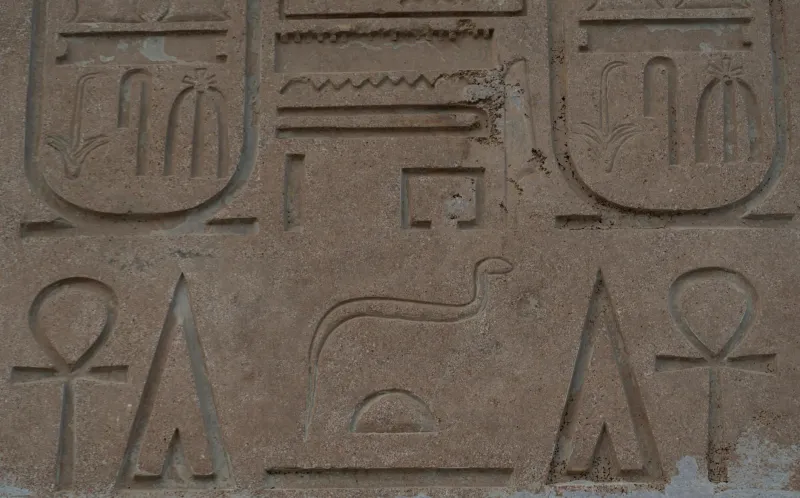
Ramesses II did not win the Battle of Kadesh. He survived it, narrowly, and then spent the next several decades covering every available wall in Egypt with inscriptions describing his magnificent triumph. The psychology that made this work in 1274 BCE is the same psychology that makes it work today, and understanding that fact changes what questions we should be asking about disinformation.

Wealth Has Always Known Where to Hide Inside a Democracy
Technology & Politics

Wealth Has Always Known Where to Hide Inside a Democracy

Before Elbridge Gerry ever drew a salamander-shaped district in Massachusetts, Roman patricians had already perfected the art of engineering electoral systems that looked democratic on the surface and functioned as oligarchies beneath. The machinery changes. The instinct does not.

The Tribe Is Always There. The Question Is What Wakes It Up.
Technology & Politics

The Tribe Is Always There. The Question Is What Wakes It Up.

Byzantine chariot fans who burned Constantinople to the ground. Federalists and Anti-Federalists who could not agree on what country they had just built. The psychology of political polarization is not a modern invention — it is a recurring human condition with identifiable triggers, predictable escalation patterns, and a stubborn resistance to the remedies people most want to apply.

Your Neighbor Was Always the Cheapest Surveillance Tool
Technology & Politics

Your Neighbor Was Always the Cheapest Surveillance Tool

Augustus Caesar discovered what the East German Stasi would confirm nearly two millennia later: the most scalable surveillance system ever devised is not a technology. It is a social arrangement. From Rome's paid delators to the Stasi's 180,000 civilian collaborators, the informant economy runs on ordinary human psychology — and it leaves recognizable marks on every society it enters.

The Republic Has Survived Before: Seven Moments Americans Were Certain It Was Over
Technology & Politics

The Republic Has Survived Before: Seven Moments Americans Were Certain It Was Over

From the XYZ Affair to the gunfire of 1968, there is a long and largely forgotten tradition of serious, reasonable Americans concluding that liberal democracy in the United States had finally met its end. They were wrong — but understanding why they were wrong is more complicated, and more important, than simply noting that they were.

Cicero Saw It Coming: What a Dead Roman Senator Knew About the Psychology of Strongmen
Technology & Politics

Cicero Saw It Coming: What a Dead Roman Senator Knew About the Psychology of Strongmen

Two thousand years before the age of social media, Marcus Tullius Cicero was documenting, in real time, exactly how a charismatic populist dismantles a republic from the inside. His warnings were ignored then for reasons that have nothing to do with ignorance — and everything to do with human nature.

Athens Had a Word for What Is Happening on Your Phone Right Now
Technology & Politics

Athens Had a Word for What Is Happening on Your Phone Right Now

The ancient Athenians developed a specific term for citizens who weaponized democratic participation to destroy political enemies through mob-driven accusation. They considered it one of democracy's most dangerous internal diseases. Thucydides and Plato both wrote about where it leads. We should read them.

Manufactured Crisis: What Rome's Debt Wars Teach Us About Congressional Brinkmanship
Technology & Politics

Manufactured Crisis: What Rome's Debt Wars Teach Us About Congressional Brinkmanship

Rome's Senate fought the same debt battles Congress stages today — complete with theatrical outrage, last-minute deals, and structural problems that never quite got solved. The performance is ancient. So is the outcome. Understanding what these crises actually resolve, and what they permanently defer, is the most useful thing a citizen can do with a history book.

Madison's Actual Nightmare: It Wasn't the Mob. It Was This.
Technology & Politics

Madison's Actual Nightmare: It Wasn't the Mob. It Was This.

The Founders are routinely invoked as skeptics of democracy who feared ordinary voters — but that reading misrepresents what they actually wrote and what they had actually studied. Madison and Hamilton were not afraid of the crowd. They were afraid of a specific kind of political operator who had appeared, with remarkable consistency, in every republic they had examined. That distinction matters enormously for how Americans evaluate their politics today.

Fifteen Times a Leader Called Journalists 'Enemies of the People' — And What Happened Next
Technology & Politics

Fifteen Times a Leader Called Journalists 'Enemies of the People' — And What Happened Next

The phrase 'enemies of the people' aimed at the press is not an insult. It is a procedure — one with a five-thousand-year operating manual and a remarkably consistent set of outcomes. The following catalog is not commentary. It is a record. Read all fifteen entries before deciding what it means.

Governments Have Always Printed Their Way Out of Trouble — And Called It Something Else
Technology & Politics

Governments Have Always Printed Their Way Out of Trouble — And Called It Something Else

From Rome's debased silver coins to Weimar Germany's wheelbarrow currency, every catastrophic inflation in recorded history began not in the economy but in a government chamber where a difficult decision was postponed. The Fed's terminology is new. The evasion is not.