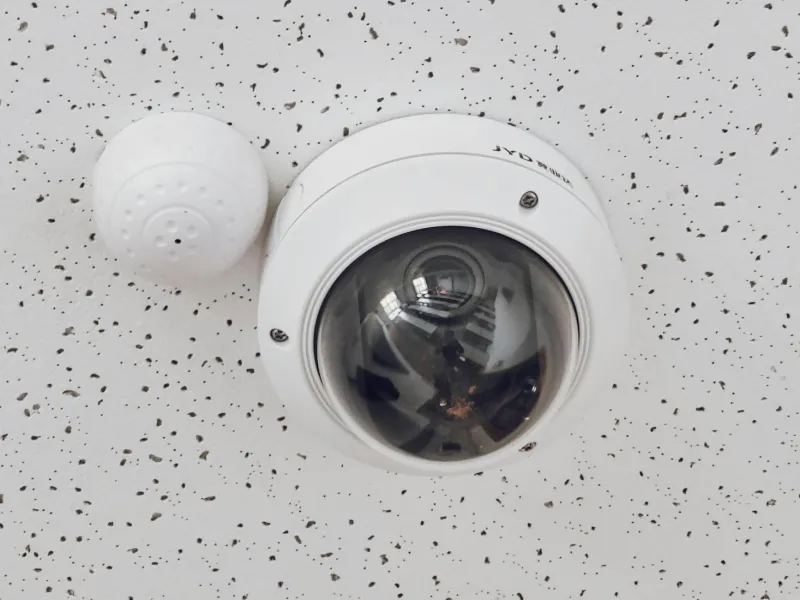
The Institution That Never Dies
In 1991, when the Berlin Wall came down and East Germany ceased to exist, something curious happened to the Stasi. The world's most comprehensive surveillance apparatus—which had employed one in fifty East Germans as informants—didn't simply vanish into history. Its personnel scattered into the private sector, its methods migrated to new contexts, and its files became the foundation for a different kind of social control. The Stasi died, but its ghost lived on.
This pattern repeats across centuries with mechanical precision. The Okhrana, Tsarist Russia's secret police, was supposedly destroyed in 1917. Yet within months, Lenin's Cheka had adopted its organizational structure, recruited from its personnel pool, and refined its techniques. When the Shah of Iran fell in 1979, SAVAK's torture chambers were shuttered—only to reopen under new management as the Islamic Revolutionary Guard Corps perfected the same methods on different enemies.
The lesson embedded in five thousand years of human governance is stark: secret police forces are designed to protect regimes, but they invariably outlive them.
The Psychology of Institutional Survival
Why do surveillance apparatuses survive when the governments that created them collapse? The answer lies in a fundamental misunderstanding of what these institutions actually are. We imagine them as ideological instruments—tools of fascism, communism, or authoritarianism. But ideology is merely their public face. At their core, they are bureaucratic organisms optimized for one thing: self-preservation.
Consider the human psychology at work. A secret police officer doesn't wake up each morning thinking about serving the Party or the Führer. He thinks about his mortgage, his children's education, his pension. When the regime falls, these practical concerns don't disappear. They create powerful incentives to find new employers who value the same skill set.
The Stasi officer who spent twenty years perfecting surveillance techniques doesn't suddenly lose that expertise when his government collapses. He becomes a private investigator, a corporate security consultant, or—in many documented cases—an advisor to the very democratic government that replaced his former masters. The institutional knowledge doesn't die; it simply finds new applications.
The Files That Never Burn
Perhaps more dangerous than the personnel is the infrastructure itself. Secret police forces are fundamentally information-gathering operations, and information has a half-life longer than plutonium. The files, the networks, the compromising material on thousands of citizens—these assets are too valuable to destroy, even by revolutionary governments that promise transparency.
When the Provisional Government took power in Russia in 1917, they inherited the Okhrana's complete surveillance apparatus. Initially, they promised to dismantle it. Instead, they found it indispensable for monitoring their own enemies. The same files that had tracked revolutionaries under the Tsar now tracked counter-revolutionaries under Kerensky. When Lenin seized power, he inherited both the files and the rationale for keeping them.
This pattern holds across cultures and centuries. Revolutionary movements discover that the fastest way to secure power is to use the same tools their predecessors used. The infrastructure is already there, the personnel are already trained, and the targets have already been identified. All that changes is the ideological justification.
The American Exception That Isn't
Americans often assume their democratic institutions provide immunity from this historical pattern. The Fourth Amendment, judicial oversight, and congressional accountability are supposed to prevent the emergence of a secret police state. But the assumption rests on a fundamental misreading of how these institutions actually develop.
Secret police forces don't announce themselves with jackboots and midnight raids. They begin as reasonable responses to genuine threats, staffed by patriotic citizens, operating under legal frameworks designed by well-intentioned legislators. The Okhrana was created to combat terrorism—and it was remarkably effective at that mission. The Stasi was designed to protect a vulnerable state from foreign intelligence services—and it excelled at that task too.
The danger lies not in the initial mission, but in the institutional momentum that develops once the apparatus exists. Bureaucracies expand to justify their budgets. Personnel develop vested interests in finding new threats to monitor. Legal frameworks stretch to accommodate operational necessities. What begins as a limited response to a specific threat becomes a general-purpose tool for social control.
The Bureaucratic Imperative
The most sobering lesson from history is that surveillance institutions develop their own logic, independent of the governments they supposedly serve. They don't simply execute policy; they shape it by controlling the flow of information to decision-makers. The secret police chief who briefs the head of state doesn't just report threats—he defines what constitutes a threat.
This creates a feedback loop that makes surveillance states remarkably stable, even as their surface politics change dramatically. The institution that was created to serve the regime gradually becomes the regime. When the visible government falls, the invisible government simply selects new public faces and continues operating.
The files change hands, but they don't disappear. The personnel change employers, but they don't change professions. The methods change targets, but they don't change character. The only thing that truly changes is the story the apparatus tells about itself.
The Lesson for Democratic Societies
The historical record offers a clear warning for any society that values freedom: it's not the ideology behind a surveillance apparatus that makes it dangerous—it's the apparatus itself. Democratic institutions can constrain these forces temporarily, but they cannot eliminate the fundamental dynamics that make secret police forces self-perpetuating.
The solution isn't better oversight or stronger legal frameworks, though both are necessary. The solution is recognizing that some institutional capabilities are too dangerous to create in the first place, regardless of the immediate justification. Once the machinery exists, it will outlive whatever government built it.
Five thousand years of human history suggest that the watchers always outlive their watchers. The only question is who they'll be watching next.