The Predictable Sacrifice
Nelson Rockefeller died in 1979, but his political death came much earlier—sometime around 1964, when he stood before the Republican National Convention and pleaded for tolerance while delegates booed him into irrelevance. The man who had governed New York for fifteen years and represented the party's moderate wing found himself branded as a liberal by conservatives and dismissed as an elitist by progressives. His political epitaph could have been written by Marcus Tullius Cicero two thousand years earlier: "The reasonable man has no place in unreasonable times."
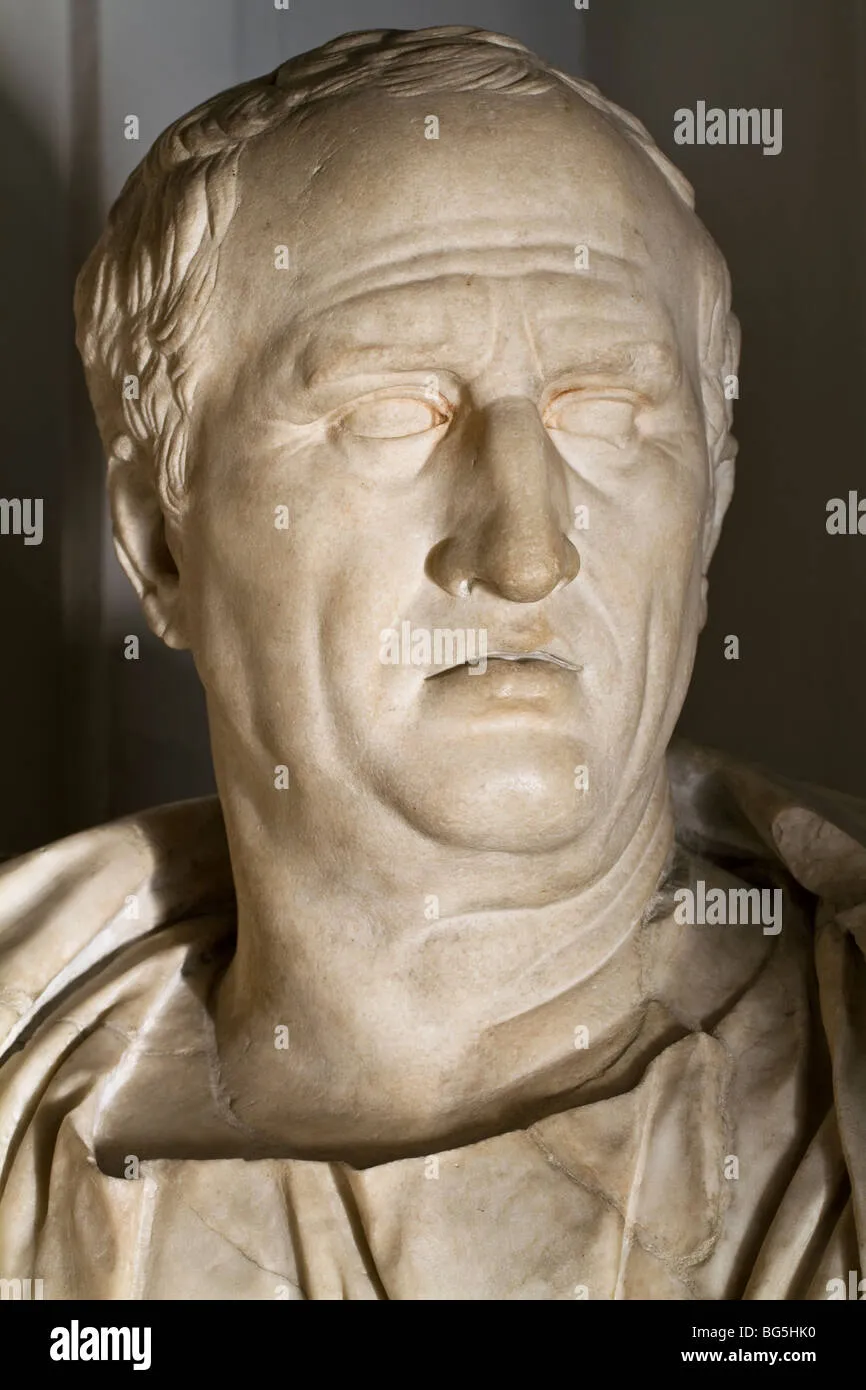 Photo: Marcus Tullius Cicero, via c8.alamy.com
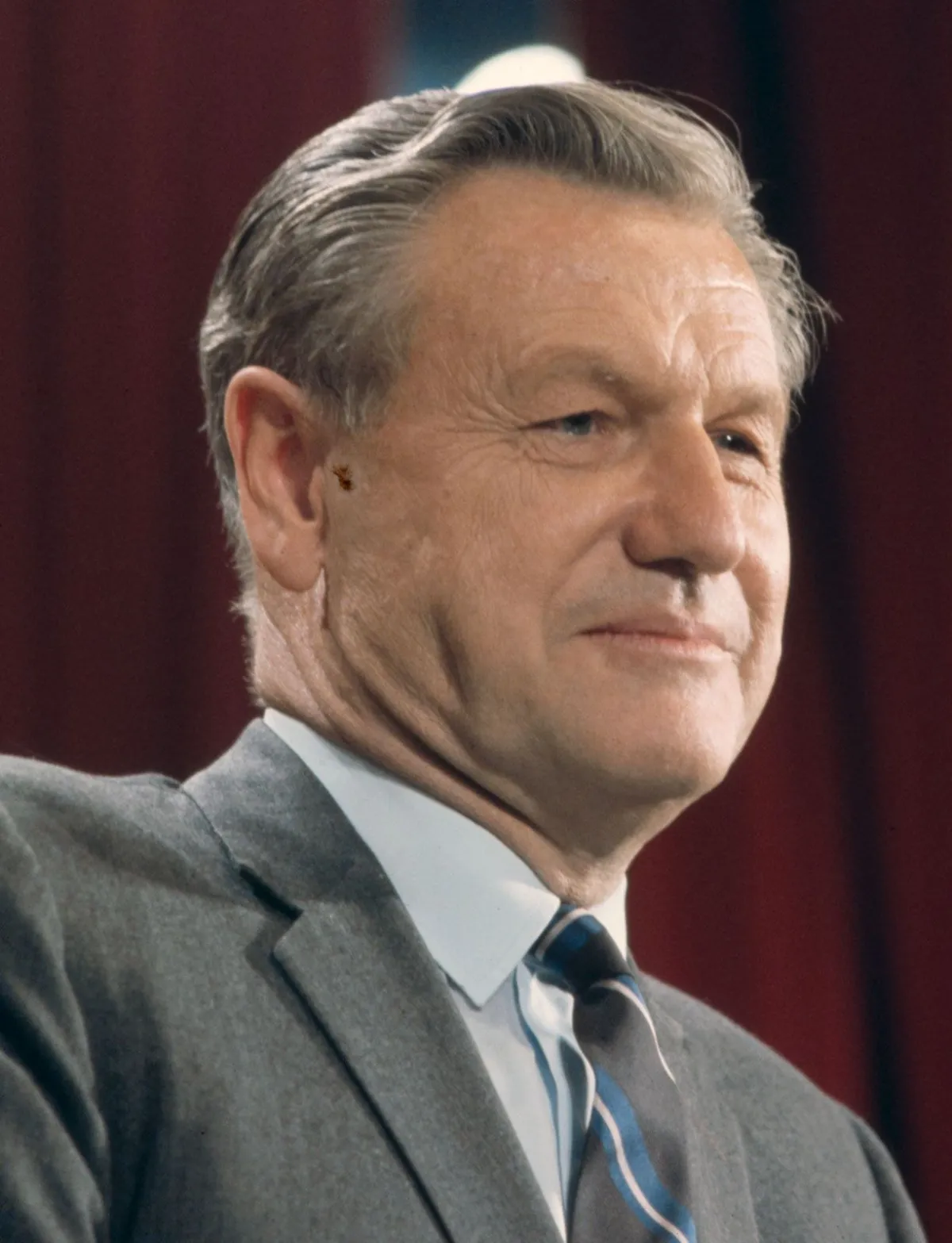 Photo: Nelson Rockefeller, via cdn.britannica.com
Every polarizing era generates its signature cautionary figure—the person who believed the center could hold, who kept faith in institutional norms while those institutions crumbled around them. These figures become historical curiosities, remembered more for their naive optimism than their political achievements. Yet their consistent appearance across cultures and centuries reveals something fundamental about how human societies fracture and why moderation becomes politically suicidal long before it becomes morally necessary.
The Roman Template
Cicero established the template for the doomed moderate in the final years of the Roman Republic. As Caesar and Pompey maneuvered for supremacy, Cicero continued to believe that constitutional government could survive through reasoned debate and institutional respect. He wrote letters urging compromise while armies marched toward civil war. He delivered speeches defending republican values while senators chose sides based on personal advantage rather than principle.
When Caesar crossed the Rubicon, Cicero faced the choice that defines every moderate in a polarizing system: pick a side or become irrelevant. He chose Pompey, not from conviction but from constitutional duty—the Senate represented legitimate authority, regardless of Pompey's character. After Caesar's victory, Cicero retired from politics, believing his usefulness had ended.
History offered him a second chance when Caesar was assassinated. Cicero emerged from retirement to lead the constitutional restoration, delivering the Philippics against Mark Antony with all the eloquence that had made him Rome's greatest orator. For a brief moment, it seemed the republic might survive. Then Antony and Octavian formed their alliance, and Cicero's name appeared on the proscription lists. He was hunted down and killed, his head and hands displayed in the Forum as a warning to anyone who still believed in the power of words over swords.
The Weimar Warning
Germany's Weimar Republic produced its own collection of tragic moderates, politicians who believed democratic institutions could survive extremist assault through proper procedure and good faith negotiation. Gustav Stresemann spent his final years building international consensus while Nazis and Communists gained strength in the streets. Heinrich Brüning attempted to govern through constitutional emergency powers while democracy collapsed around him.
The most poignant figure may be Otto Wels, the Social Democratic leader who delivered the only speech against Hitler's Enabling Act in March 1933. Standing before a chamber filled with Nazi brownshirts, Wels declared: "We German Social Democrats pledge ourselves solemnly in this historic hour to the principles of humanity and justice, of freedom and socialism. No enabling act can give you power to destroy ideas which are eternal and indestructible."
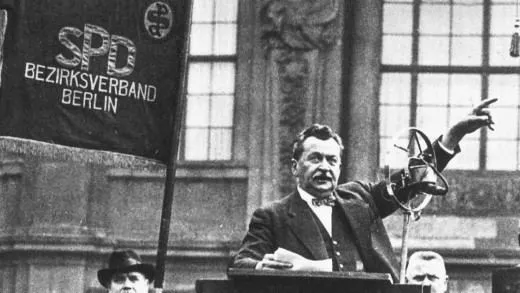 Photo: Otto Wels, via alchetron.com
Wels was technically correct—ideas proved more durable than the regime that suppressed them. But he was politically naive to believe that constitutional process could constrain a movement that had already abandoned constitutional norms. His speech became a historical monument to principled futility, remembered precisely because it was so obviously doomed.
The American Pattern
American politics has produced its own succession of moderate martyrs, though the stakes have remained mercifully lower than in Rome or Weimar. Each era of polarization generates politicians who continue to believe in institutional solutions while those institutions lose their capacity to function.
Nelson Rockefeller represented the last gasp of Republican moderation before the party's conservative revolution. His positions—support for civil rights, environmental protection, and government activism—would later become Democratic orthodoxy, but in 1964 and 1968 they made him unacceptable to his own party's base. He spent his final political years watching the GOP move away from everything he had represented.
Similarly, Joe Lieberman embodied Democratic centrism until his party moved left and his foreign policy views became unacceptable to primary voters. His 2006 primary defeat in Connecticut marked the end of the hawkish Democrat as a viable political type. Like Rockefeller, Lieberman found himself politically homeless not because his views changed, but because his party's center of gravity shifted beneath him.
The Psychology of Moderation
Why do moderates consistently misread the political moment? The answer lies in the psychological differences between people who seek political center and those who embrace ideological purity. Moderates tend to believe that reasonable people can disagree reasonably, that institutional norms have independent value, and that political opponents share basic assumptions about democratic governance.
These beliefs serve democracy well during stable periods but become dangerous liabilities during polarizing crises. When political competition becomes existential—when each side views the other as an illegitimate threat to the constitutional order—moderation becomes collaboration with the enemy.
The moderate's faith in process over outcome makes them peculiarly vulnerable to exploitation. They will honor norms that their opponents abandon, seek compromise with people who view compromise as weakness, and defend institutions that those institutions' enemies are actively subverting.
The Lagging Indicator
History suggests that the political moderate is not a stabilizing force so much as a lagging indicator that stabilization has already failed. By the time moderate voices become marginalized, the center has already collapsed; the moderates are simply the last to recognize it.
Cicero's death marked the end of the Roman Republic's constitutional period, but the republic had been dying for decades before his assassination. Rockefeller's political irrelevance signaled the end of postwar Republican consensus, but that consensus had been eroding since Goldwater's 1964 campaign.
The moderate's tragedy is not that they are wrong about the value of institutional norms and democratic process. They are usually correct that these things matter enormously for political stability and social peace. Their tragedy is that they continue to act as if these norms retain their force after the underlying political consensus that sustained them has collapsed.
The Eternal Return
Every generation rediscovers the moderate's dilemma and imagines itself immune to the historical pattern. Today's centrist politicians believe they can bridge partisan divides through personal relationships and institutional respect, just as their predecessors believed in every previous era of polarization.
The pattern will repeat because the psychology that drives it remains constant. Human beings form tribal loyalties, especially during periods of stress and uncertainty. Political moderation requires a kind of cognitive sophistication that becomes increasingly rare as tribal identities strengthen. The moderate's appeal to reason and process sounds naive to people who believe their opponents represent existential threats.
Five thousand years of political history suggest that moderation is a luxury of stable times, not a solution for unstable ones. The reasonable man's funeral is always well-attended, but the mourners are usually burying more than just a person—they are burying the political order that made reasonableness possible.