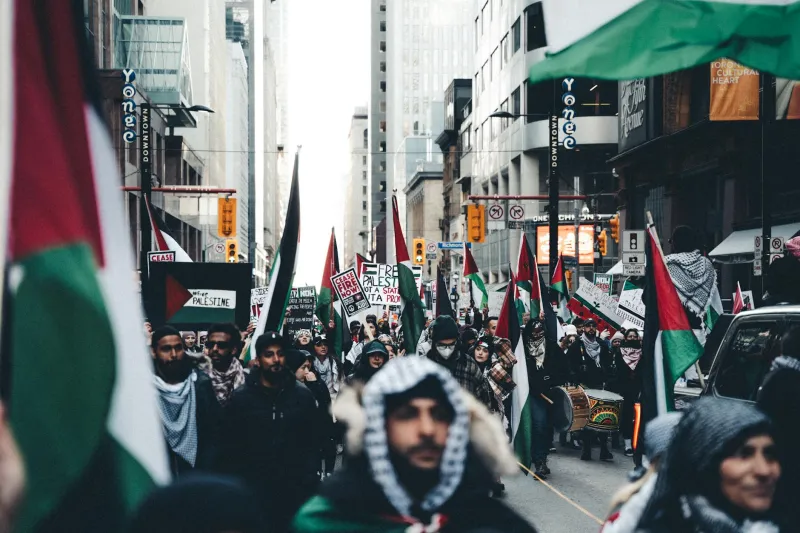
Every few years, a commentator publishes a piece arguing that American political polarization has reached a historic peak — that the country has never been this divided, that the current level of partisan animosity is unprecedented, that something fundamental has broken. The commentator is usually sincere. The claim is always wrong. Not because polarization is not real or not serious, but because the claim depends on a historical amnesia so complete it amounts to a kind of cultural narcissism. The tribe is not a new invention. The conditions that activate it are not new either.
Constantinople Is on Fire, and It Started at the Racetrack
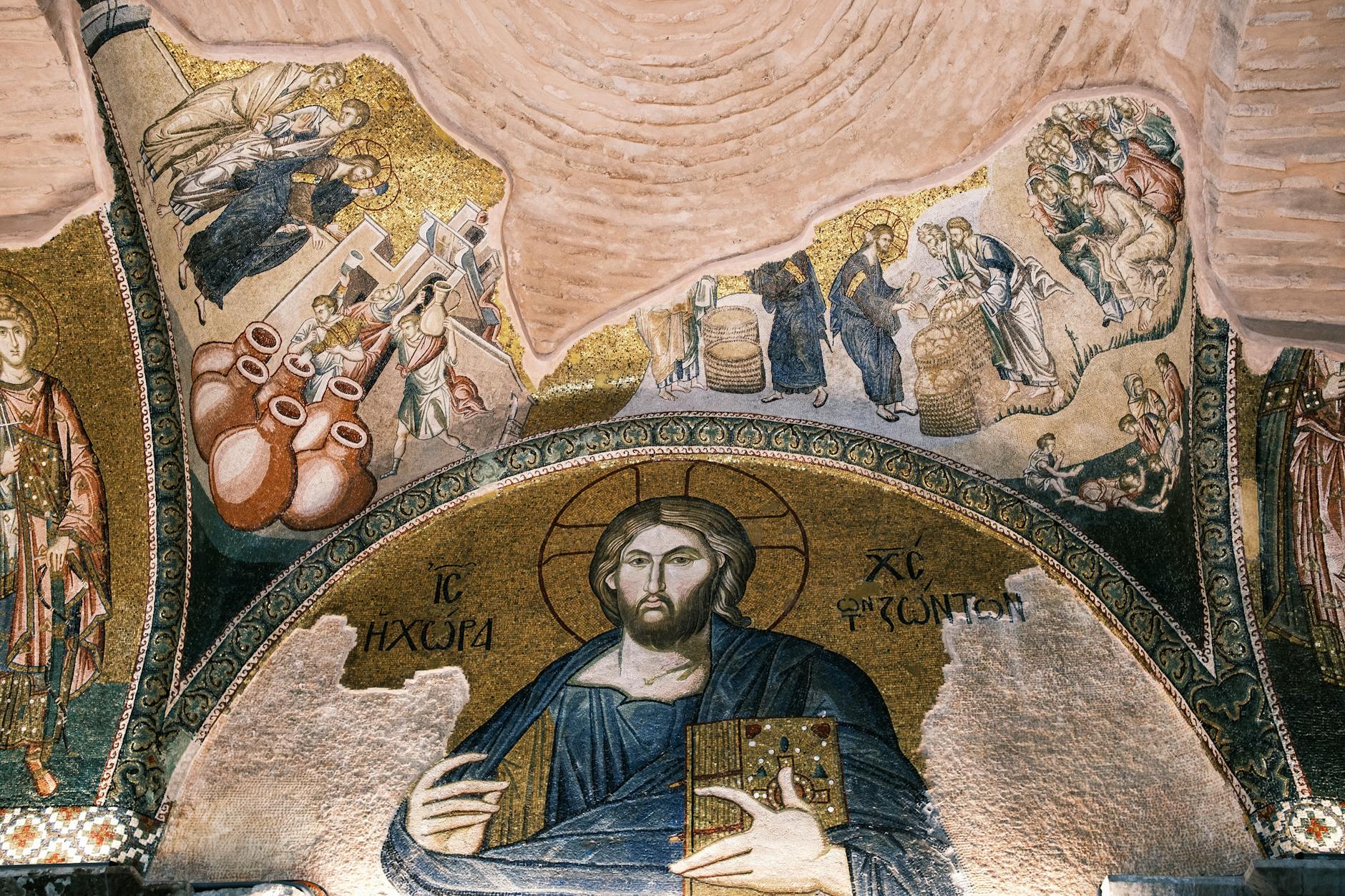
In January of 532 CE, the city of Constantinople descended into six days of catastrophic rioting that left tens of thousands dead and much of the imperial capital in ruins. The Nika Revolt — named for the Greek word for 'victory,' which rioters chanted in the streets — came within hours of toppling the Emperor Justinian entirely. He reportedly had his bags packed for flight when his wife Theodora delivered what historians have called one of the most consequential speeches in Byzantine history, shaming him into staying.
The proximate cause of the revolt was the chariot racing factions known as the Blues and the Greens.
This requires a moment of adjustment for modern readers. Chariot racing factions. Not political parties in the formal sense, not religious movements, not ethnic coalitions — though they became all of those things eventually — but organizations that had begun as fan clubs for competing teams in the hippodrome. The Blues and the Greens had their own colors, their own chants, their own neighborhoods, and their own violent street gangs. They also developed, over generations, their own theological positions, their own relationships with the imperial court, and their own distinct class compositions. Blue tended to draw from the merchant and artisan classes; Green from the urban poor and agricultural laborers.
By the sixth century, being Blue or Green was not a recreational identity. It was a total one. It structured where you lived, whom you married, how you worshipped, and who your enemies were. The racetrack was merely the arena where the identity performed itself most visibly.
The Nika Revolt began when the two factions, briefly united by shared grievances against Justinian's government, turned their combined violence against the state itself. The unity did not last — it rarely does — but the destruction it produced in six days was measured in neighborhoods.
The Pattern Across Six Civilizations
The Byzantine case is vivid, but it is not unique. The same underlying structure — identity groups that begin as something relatively benign, accumulate grievances, acquire political valence, and eventually treat every question as a question of group loyalty — appears with remarkable consistency across the historical record.
In the late Roman Republic, the optimates and populares were not formal parties. They were tendencies, factions, ways of positioning oneself relative to senatorial tradition and popular sentiment. By the time of Caesar and Pompey, those tendencies had hardened into something that made negotiated compromise functionally impossible. The civil wars that followed were not simply about two men's ambitions. They were about two coalitions that had decided the other's continued political existence was intolerable.
In seventeenth-century England, the Cavaliers and Roundheads divided not only on the question of the king's authority but on questions of fashion, religion, recreation, and moral character. To be a Roundhead was to hold a complete theory of the good life, one that was incompatible at every point with the Cavalier version. The Civil War was, among other things, a war between two total worldviews that had run out of shared ground.
In revolutionary France, the distance between Girondins and Jacobins — both republican, both committed to the revolution — collapsed with extraordinary speed into mutual accusations of treason, followed by the guillotine. The Terror was not an accident of radicalism. It was the logical endpoint of a polarization dynamic in which every political disagreement became a question of loyalty, and every question of loyalty became a question of survival.
The Federalists and Anti-Federalists of early America were, by the standards of history, relatively restrained in their methods. They were not restrained in their language. Anti-Federalists described the proposed Constitution as a conspiracy of the wealthy to enslave the common citizen. Federalists described their opponents as dangerous demagogues who would reduce the new nation to mob rule. They were not describing policy differences. They were describing existential threats.
What the Psychology Actually Shows
The social psychology of group identity — developed over decades of research, including the famous minimal group paradigm experiments of Henri Tajfel — consistently demonstrates that humans require very little provocation to form in-group loyalties and direct hostility toward out-groups. Chariot racing colors are sufficient. Arbitrarily assigned labels in a laboratory are sufficient. The tribe does not need a profound reason to activate. It needs a boundary.
What history adds to the laboratory finding is the observation of what makes those boundaries harden into something dangerous. The consistent variables across the cases above are not the specific content of the disagreement. They are structural: weakening institutions that previously mediated between factions, economic stress that raises the perceived stakes of political outcomes, and — critically — the availability of leaders willing to benefit from escalation rather than absorb its costs.
Justinian's court had spent years playing the Blues and Greens against each other, favoring one faction and then the other to manage their rivalry. The factions grew stronger, more organized, and more violent as a result. The short-term political utility of managed polarization had produced a long-term threat that nearly ended the empire.
What Actually Breaks the Cycle — And What Does Not
The remedies that feel most intuitive tend to perform worst historically. Appeals to common identity — 'we are all Romans,' 'we are all Americans' — have some rhetorical force but limited structural effect when the material conditions driving polarization remain unchanged. Calls for civility, similarly, address the symptom rather than the mechanism. People are not uncivil because they have forgotten their manners. They are uncivil because they have concluded that the other faction represents a genuine threat to something they value.
What the historical record suggests works, imperfectly and slowly, is the restoration of institutional credibility — courts, legislatures, and mediating bodies that factions believe will treat them fairly even when they lose. Rome's republic survived its sharpest early conflicts in part because its institutions, however imperfect, retained enough legitimacy to make political defeat feel survivable. When that credibility eroded, the conflicts became existential.
The second factor is economic: polarization consistently intensifies when the perceived stakes of political outcomes rise, which happens most sharply during periods of economic insecurity. Addressing the underlying material conditions does not dissolve tribal identity, but it reduces the urgency that makes tribal identity feel like the only relevant one.
None of this is a formula. History does not offer formulas. It offers patterns, probabilities, and the sobering observation that the current generation's certainty that its polarization is uniquely terrible is itself part of the pattern — the same conviction held, with equal sincerity, by every generation that came before.