The Democracy That Never Ended: How America's Wartime Powers Became Permanent Government
On September 14, 2001, Congress passed the Authorization for Use of Military Force with a single dissenting vote. The 60-word resolution, drafted in the immediate aftermath of the Twin Towers' collapse, granted the president broad authority to pursue those responsible for the attacks. Twenty-three years later, this "temporary" authorization has been invoked to justify military operations in at least 37 countries, detention programs that span decades, and surveillance systems that monitor millions of Americans who weren't born when the towers fell.
This transformation from emergency response to permanent infrastructure follows a script written long before America existed. Across five millennia, temporary powers granted during genuine crises have demonstrated a remarkable ability to outlive both the emergencies that created them and the leaders who first wielded them.
The Roman Template
The Roman Republic understood this danger intimately. Their solution was the dictatorship — not the modern version we associate with permanent autocracy, but a temporary office designed with built-in limitations. A dictator could be appointed only during specific emergencies, held power for a maximum of six months, and was expected to resign the moment the crisis ended.
For three centuries, this system worked exactly as designed. Dictators accepted appointment, addressed the immediate threat, and returned to private life. The most famous example, Lucius Quinctius Cincinnatus, supposedly left his plow to save Rome from invasion, then returned to farming after just 16 days in office.
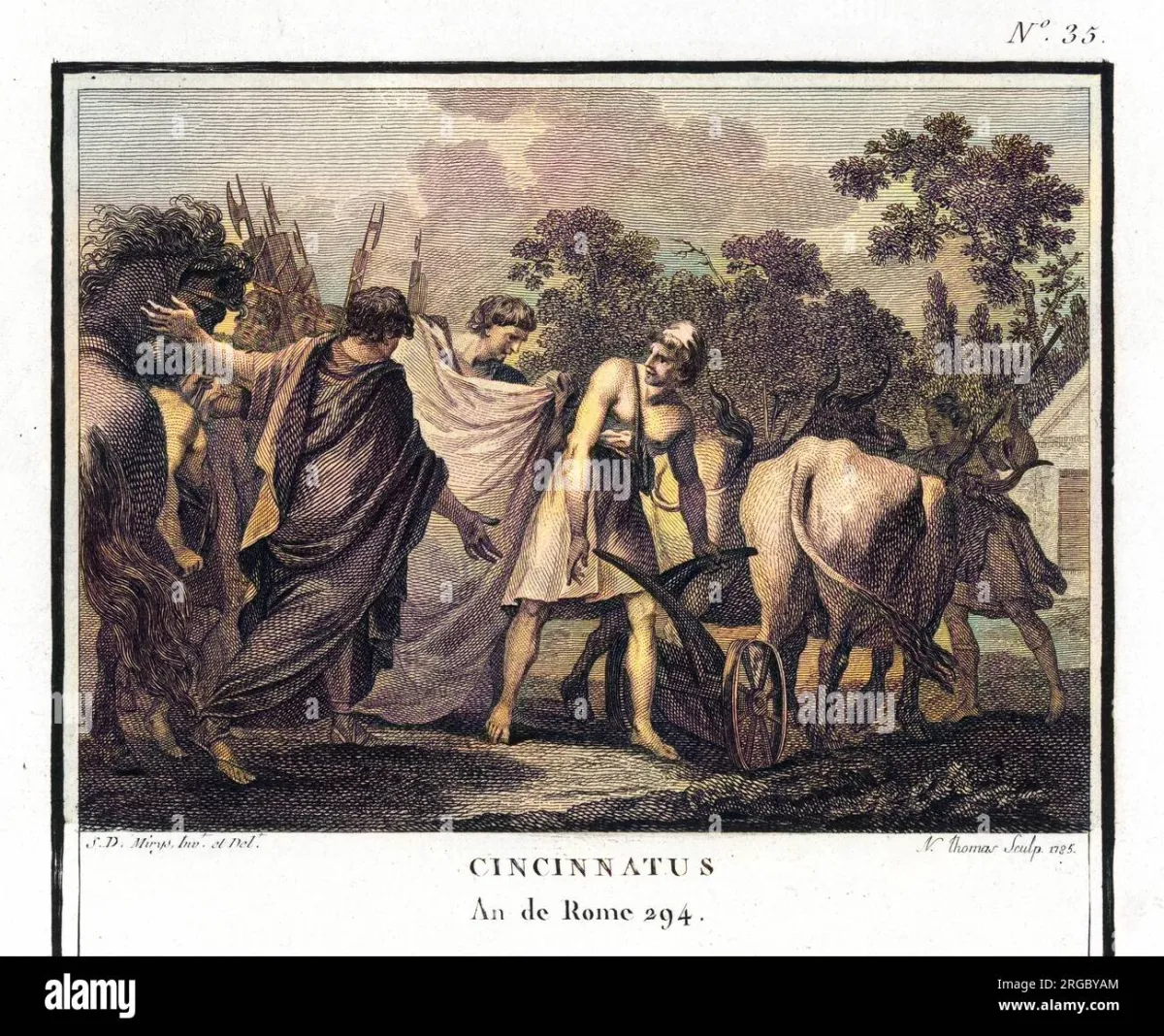 Photo: Lucius Quinctius Cincinnatus, via c8.alamy.com
The system's very success, however, contained the seeds of its destruction. As Romans grew comfortable with temporary emergency powers, the limitations began to seem less essential. Sulla extended his dictatorship beyond six months. Julius Caesar eliminated the time limit entirely. By the time Augustus claimed permanent emergency authority to "restore" the republic, Romans had forgotten why their ancestors feared concentrated power in the first place.
 Photo: Julius Caesar, via www.creativefabrica.com
The pattern wasn't unique to Rome. Ancient Athens suspended democratic procedures during military emergencies, granting extraordinary authority to generals who, predictably, discovered that the emergencies required longer and longer extensions. Chinese dynasties declared temporary tax increases during rebellions that somehow remained necessary long after the rebels were defeated.
The Architecture of Permanence
What makes emergency powers so persistent? The answer lies in how institutions adapt to new capabilities. Once a government develops the infrastructure to exercise expanded authority — surveillance networks, detention facilities, legal precedents, bureaucratic procedures — that infrastructure doesn't simply vanish when the original crisis ends.
Consider the evolution of American federal power during the Civil War. Lincoln's administration suspended habeas corpus, imposed military tribunals on civilians, censored newspapers, and seized private property on an unprecedented scale. These measures were clearly temporary responses to an existential threat to the Union. Yet the legal precedents, bureaucratic mechanisms, and expanded federal agencies created during the war provided the foundation for permanently enlarged federal authority.
The same pattern repeated during both World Wars. The 1917 Espionage Act, passed to prevent interference with military recruitment during World War I, remains on the books today and has been used to prosecute everyone from Cold War spies to WikiLeaks sources. The wartime income tax, introduced as a temporary measure to fund the Spanish-American War, never disappeared — it simply found new justifications.
World War II accelerated this process exponentially. The Office of Strategic Services became the CIA. Wartime code-breaking operations evolved into the National Security Agency. Emergency economic controls transformed into permanent regulatory agencies. Each transition followed the same logic: the capabilities developed during crisis were too valuable to abandon once the crisis passed.
The Digital Acceleration
The post-9/11 era represents this ancient pattern's collision with digital technology. The PATRIOT Act, passed just 45 days after the attacks, granted surveillance authorities that would have been unimaginable to previous generations of Americans. The National Security Agency gained the ability to collect metadata from millions of phone calls, monitor internet communications, and store vast databases of personal information.
These capabilities were sold as temporary measures to address an unprecedented threat. Yet as Edward Snowden's 2013 revelations demonstrated, the surveillance infrastructure had expanded far beyond its original justifications. Programs initially designed to track foreign terrorists were routinely used for domestic law enforcement, economic espionage, and political intelligence gathering.
The pattern extends beyond surveillance to detention policies, military tribunals, and assassination programs. The prison at Guantanamo Bay, opened as a temporary facility to hold captured Taliban fighters, remains operational two decades later despite multiple presidential promises to close it. Military commissions, designed as emergency courts for foreign combatants, have been institutionalized as permanent alternatives to federal trials.
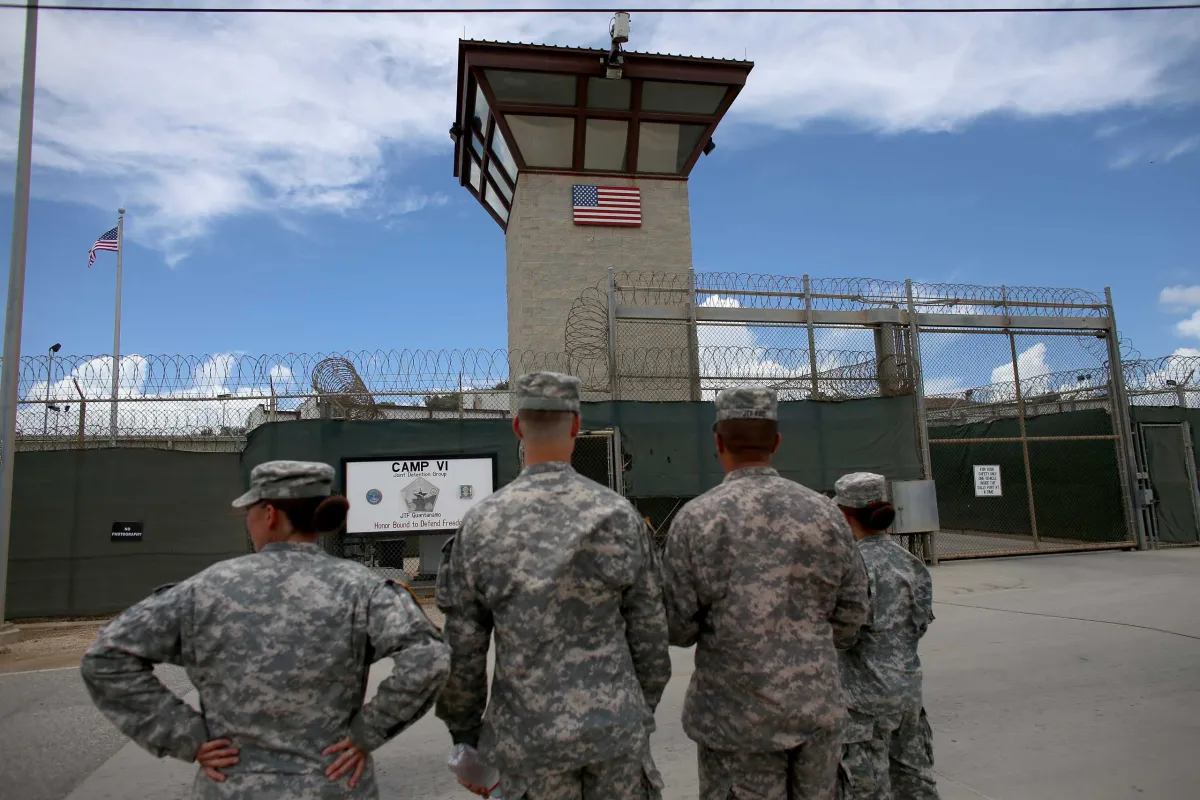 Photo: Guantanamo Bay, via api.time.com
Most significantly, the legal framework justifying these measures has become self-perpetuating. The "war on terror" was explicitly designed as an indefinite conflict against a tactic rather than a specific enemy. Unlike traditional wars that end with surrender or treaty, this framework provides no clear criteria for when emergency powers should expire.
The Psychology of Institutional Mission Creep
Why do emergency powers expand rather than contract over time? The answer lies in how institutions justify their continued existence. Bureaucracies developed during crises don't simply wait passively for their missions to end — they actively discover new applications for their capabilities.
The Department of Homeland Security, created in 2002 to coordinate counterterrorism efforts, now oversees immigration enforcement, disaster response, cybersecurity, and border protection. The Transportation Security Administration, established to prevent airplane hijackings, has expanded its authority to trains, buses, and even highway checkpoints. Each expansion follows the same logic: existing capabilities can address newly identified threats.
This mission creep isn't evidence of bureaucratic conspiracy but of institutional psychology. Organizations naturally seek to maximize their relevance and resources. Emergency powers provide both the legal authority and political justification to expand into new domains. What begins as a narrow response to a specific threat evolves into a general-purpose tool for addressing any problem that can be framed in terms of the original emergency.
The Democratic Paradox
The persistence of emergency powers creates a fundamental paradox for democratic governance. Democracies grant temporary authority precisely because they trust their institutions to return power once the crisis passes. Yet this trust enables the very expansion that undermines democratic constraints.
The problem isn't that democratic leaders deliberately abuse emergency powers — though that certainly happens — but that the logic of emergency governance conflicts with the logic of democratic accountability. Emergency powers are designed to act quickly without the deliberation, compromise, and transparency that characterize normal democratic processes. Once established, these expedited procedures become attractive solutions to any problem requiring swift action.
The COVID-19 pandemic illustrated this dynamic clearly. State and federal officials invoked emergency powers to implement lockdowns, distribute relief funds, and coordinate public health responses. Many of these measures were necessary and effective. Yet the same authorities were used to bypass normal legislative processes, redirect funds without congressional approval, and implement policies that would have faced significant opposition through regular democratic channels.
The Ratchet Effect
Emergency powers demonstrate what political scientists call the "ratchet effect" — they expand during crises but never fully contract during periods of normalcy. Each emergency adds new capabilities to the government's toolkit. Each expansion creates precedents that make future expansions easier to justify.
This process is particularly visible in surveillance technology. The wiretapping capabilities developed during Prohibition were expanded during World War II, computerized during the Cold War, and digitized after 9/11. Each generation of technology builds on the legal and institutional foundations laid by its predecessors.
The same pattern applies to detention policies, censorship authorities, and economic controls. Powers granted during the Civil War provided precedents for World War I expansions, which justified World War II measures, which enabled Cold War programs, which laid the groundwork for post-9/11 authorities.
Breaking the Pattern
History offers few examples of emergency powers voluntarily relinquishing themselves. The rare exceptions — like Washington's resignation from military command or Cincinnatus's return to farming — became legendary precisely because they violated the normal pattern of power accumulation.
Yet these exceptions suggest that institutional design can matter. The Roman Republic's six-month limit on dictatorships worked for centuries because it was embedded in cultural expectations as well as legal requirements. Washington's precedent of voluntary retirement shaped American presidency for over a century before being codified in the 22nd Amendment.
The challenge for contemporary democracies is designing emergency authorities that can respond effectively to genuine crises while preserving genuine constraints on their duration and scope. This requires more than legal sunset clauses — which can be extended — or congressional oversight — which can be captured. It requires institutional cultures that treat the return of emergency powers as seriously as their initial grant.
The alternative is the path taken by every democracy that convinced itself its emergency was different, its leaders more trustworthy, its circumstances more exceptional. That path leads, with historical consistency, to the discovery that temporary powers are never temporary — they just find new justifications for permanence.