Decibels as Ballots: The Ancient Habit of Hearing Consent
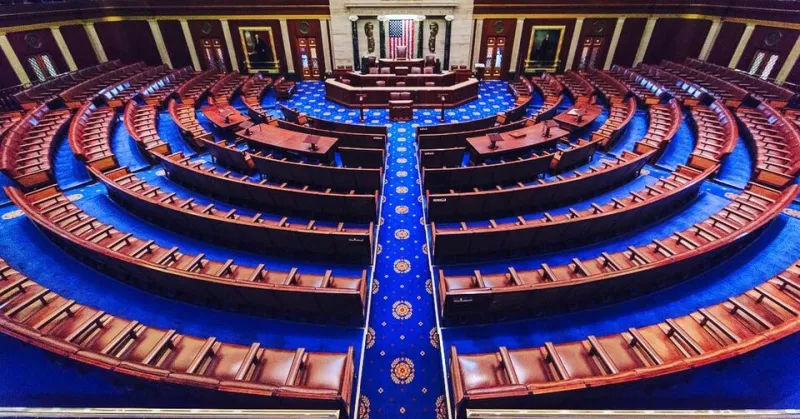
Photo: United States House of Representatives or Office of the Speaker of the House, Public domain, via Wikimedia Commons
On the floor of the House of Representatives, the most revealing sound is often not a speech. It is the room. A burst of applause, a chant, a wave of groans, or the brittle silence that follows a member's remark can travel through television and social media faster than any roll-call vote. Viewers treat those sounds as evidence of political reality: who is winning, who is isolated, who has crossed a line. That instinct is not a modern artifact of cable news. It is one of the oldest ways human beings have measured consent, and it predates the ballot by centuries.
The Acclamation Before the Vote
Roman public life ran on noise as much as on procedure. The acclamatio was a formalized expression of approval — in the theater, in the army, in the assembly, and eventually in the imperial court. A candidate or a magistrate could read the room before any tally was taken. Crowds were not merely spectators; they were participants whose volume could confer or withhold legitimacy. The practice persisted because it solved a practical problem: in communities without mass literacy or reliable record-keeping, the sound of many people agreeing was the fastest available evidence that agreement existed.
Byzantine politics made the same logic visible in its most dangerous form. The circus factions — the Blues and the Greens — were nominally sports associations, but their chants and demonstrations carried political weight. The Nika riots of 532 AD began in the hippodrome and nearly ended an emperor. The lesson was not that applause is frivolous. It was that a coordinated roar can become a claim on power, and a ruler who misreads the volume of the room does so at his peril.
The Congress That Clapped on Cue
Modern authoritarian assemblies refined the technique rather than abandoning it. Soviet party congresses were famous for their staged ovations, where delegates rose, applauded, and sat only when the performance had served its purpose. The applause was not a measurement of genuine enthusiasm; it was a demonstration of disciplined unanimity. Yet even staged noise carries information. Observers learned to read the length of an ovation, the order in which delegates rose, and the faces of those who hesitated. The ritual was engineered, but the diagnosis it invited was real.
That dual character — applause as both expression and manufacture — is what makes it such a durable political tool. A demonstration can be genuine and still be organized. A crowd can be sincere and still be prompted. The question is never whether the sound is real in some pure sense. The question is who arranged the room, who controls the microphones, and who benefits from the impression that the room is unanimous.
The Floor as a Diagnostic Instrument
American politics has its own versions of this ritual. Floor demonstrations in the House and Senate, standing ovations at State of the Union addresses, and the carefully timed reactions of party caucuses are all read by audiences as signals. The modern twist is that the audience is no longer only in the chamber. C-SPAN cameras, social media clips, and cable-news panels turn a three-second reaction into a national data point. A member who is applauded is treated as ascendant; a member who is met with silence is treated as finished. The diagnosis often outruns the evidence.
This is where the ancient habit becomes strategically useful. If audiences use applause as a test of legitimacy, then anyone who can shape the applause can shape the test. Political organizers have long understood this. Roman candidates had their claques; modern campaigns have rally crowds and curated audiences; advocacy groups coach supporters to cheer at the right moments. None of this is new, and none of it is necessarily illegitimate. Representative politics has always involved displays of support. What changes is the sophistication of the staging and the speed with which the staging is broadcast.
Why the Room Still Matters
The deeper reason applause persists is psychological. Human beings are social animals who take cues from crowds, especially when the stakes are high and the information is ambiguous. A voter who cannot read a piece of legislation can still read a room. A citizen who does not follow procedural details can still notice who is applauded and who is not. The applause meter is a shortcut to judgment, and like most shortcuts it can be exploited.
History does not offer a clean remedy. It offers a warning. The societies that treated noise as proof of consent were not naive; they simply lacked better instruments. Modern democracies have better instruments — roll-call votes, public records, independent audits — but they have not stopped using the older ones. The chamber still erupts, the clip still circulates, and the audience still draws conclusions. The useful question is not whether applause belongs in politics. It is whether the people watching know who built the stage.