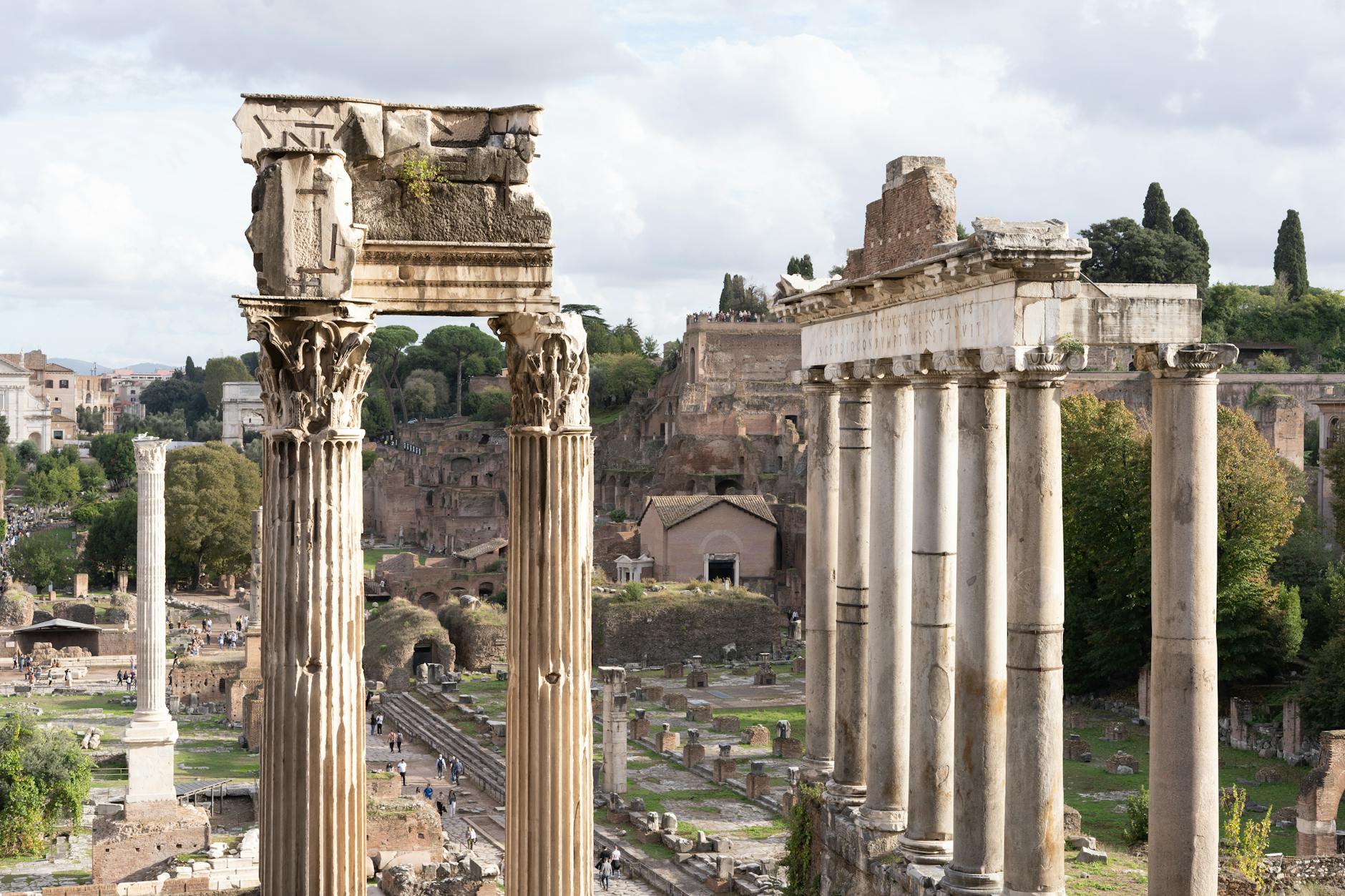
In the winter of 49 BC, as Julius Caesar's legions crossed the Rubicon and marched toward Rome, Marcus Tullius Cicero sat in his villa and wrote letters. Dozens of them. He wrote to friends, to former allies, to political rivals he now desperately wished were still rivals rather than converts. In those letters — many of which survive — he described something that felt, to him, like watching a man he had known for thirty years transform before his eyes into something the Roman constitution had no category for.
Cicero was not a fool. He was arguably the finest legal mind of his age, a self-made man from the provincial town of Arpinum who had clawed his way to the consulship through sheer rhetorical brilliance. He understood power. He had wielded it. And yet, reading his letters and speeches today — particularly the Philippics, his final, fatal series of orations against Mark Antony — what strikes the modern reader is not how foreign his predicament feels, but how suffocatingly familiar it is.
The citizens of Rome were not stupid. They were human. And so are we.
The Playbook Cicero Watched Being Written
Caesar did not seize power in a single dramatic coup. That is the version of history that feels satisfying because it has a clear villain and a clear moment. The actual record is considerably more uncomfortable. Caesar accumulated power gradually, through mechanisms that each, individually, seemed defensible — even popular.
He staged spectacles. His gladiatorial games were on a scale Rome had never seen, honoring his late father in a display of filial piety so extravagant it functioned as political advertising. Cicero noted, with characteristic dry precision, that the Roman crowd did not ask who was paying for any of this or what Caesar expected in return. The spectacle was the message. Generosity at scale communicates power, and power, to the human brain, communicates safety.
He cultivated a cult of personal loyalty that superseded institutional loyalty. Caesar's soldiers were his soldiers, not Rome's. His clients were his clients. When Cicero watched men he had served alongside in the Senate begin deferring to Caesar not because the law required it but because Caesar's favor had become more valuable than the law's protection, he understood what was happening. He wrote about it with a kind of exhausted clarity: the republic was not being destroyed by Caesar alone. It was being abandoned by the people who had agreed to maintain it.
And he used the language of restoration. Always restoration. Caesar did not present himself as a revolutionary. He presented himself as the one man willing to fix what the corrupt establishment had broken. The optimates — Rome's entrenched aristocratic faction — were, by Caesar's account, the real threat to Roman tradition. He was merely the remedy.
Why Nobody Listened to the Man Who Was Right
Cicero's tragedy is not that he failed to see clearly. His tragedy is that he saw clearly and it made no difference.
The psychological literature on this is extensive, even if it was written by researchers studying undergraduates rather than senators. We now have clinical language for what Cicero's contemporaries were experiencing: motivated reasoning, in-group loyalty overriding factual assessment, the sunk-cost dynamics of having already publicly supported a figure whose behavior is becoming impossible to defend. Once a person has staked their reputation on a leader's fundamental decency, the mind will perform extraordinary contortions before it will allow that bet to be called a loss.
Cicero watched this in real time. He watched men who privately agreed with his assessment of Caesar publicly dismiss his concerns as the complaints of an envious, out-of-touch aristocrat. Sound familiar? The specific accusation changes across centuries. The function it serves does not. Discrediting the messenger is always cheaper than engaging the message.
There was also the seductive comfort of the adjacent position — the belief, held by many of Rome's serious, sober men, that Caesar could be managed. That he was useful. That the real danger was the chaos he was promising to resolve, not Caesar himself. Cicero's letters document his mounting frustration with this argument. He had a word for the men who made it. He called them otiosi — the complacent ones.
The Rhetoric That Crosses Millennia
What Caesar understood, and what Cicero documented with the precision of a man who had spent his career analyzing persuasion, was that political language is not primarily a vehicle for information. It is a vehicle for emotion. Specifically, for the emotions that override deliberation: fear, pride, grievance, and the intoxicating solidarity of shared contempt.
Caesar's public addresses were not policy documents. They were performances calibrated to produce a specific physiological response in a crowd. The enemies were vivid and personal. The remedies were simple. The speaker alone possessed the will to act. Cicero, whose own oratory was among the most sophisticated Rome had ever produced, recognized the technique because he had used versions of it himself — but always, he would have insisted, in service of the law. What Caesar was doing was using the same instrument to hollow the law out.
The modern parallel is not subtle, and this publication does not require us to belabor it. What is worth dwelling on is the part that contemporary commentary most often skips: the audience. Caesar's crowds were not passive recipients of manipulation. They were active participants in it. They wanted what he was selling. The grievances were real. The establishment he was running against had, in many measurable ways, failed them. Cicero knew this too. He was not defending a perfect republic. He was defending an imperfect one against something he believed would be worse.
What Cicero's End Teaches Us
Cicero was executed in 43 BC, on the orders of the Second Triumvirate. His hands were cut off — the hands that had written the Philippics — and displayed on the Rostra in the Roman Forum, the very platform from which he had delivered them. Mark Antony's wife, according to the historian Cassius Dio, took his severed head and drove a hairpin through the tongue.
It is a brutal image, and it is meant to be. But the more instructive image is an earlier one: Cicero, still alive, still writing letters, still trying to persuade men who had already decided that persuasion was less important than survival.
The citizens of Rome were not uniquely credulous or uniquely cowardly. They were responding to incentives and instincts that five thousand years of recorded human behavior confirm are universal. The senator who saw it coming was not smarter than his peers in any absolute sense. He was simply more willing to say the thing that cost something to say.
That willingness, history suggests, is rarer than intelligence. It is also, history suggests, the thing that republics cannot survive without.