
The Moment Abstraction Becomes Personal
In 1765, when British tax collectors began requiring colonial Americans to purchase stamps for legal documents, newspapers, and playing cards, they unknowingly triggered a psychological transformation that would reshape world history. The Stamp Act didn't just impose a financial burden — it made the abstract concept of imperial rule viscerally, personally real for millions of people who had previously experienced British authority as a distant abstraction.
This transformation reveals something fundamental about the relationship between taxation and political legitimacy that has remained constant across five thousand years of recorded history: taxes are never really about money. They are about the moment when state power stops being theoretical and becomes undeniably present in individual lives.
Every major popular uprising in recorded history has featured taxation prominently, not because taxes are uniquely oppressive compared to other forms of state power, but because they are uniquely personal. When a government demands a portion of what someone has earned through their own labor, it forces a psychological reckoning that other forms of authority can avoid.
The Salt That Toppled Empires
The pattern appears with remarkable consistency across cultures and centuries. In imperial China, salt taxes fueled repeated peasant rebellions because salt was essential for food preservation — making the tax a daily reminder of state power in every household. The French monarchy's gabelle, or salt tax, became so hated that it helped trigger the revolution of 1789, with peasants literally dying rather than pay for a substance they could gather freely from the sea.
What made these taxes particularly inflammatory wasn't their economic burden, though that was real. It was their psychological impact. Unlike tribute payments or military conscription, which affected people episodically, consumption taxes created a constant, grinding awareness of state power. Every meal became a reminder of subjugation.
This psychological dynamic explains why tax revolts often seem disproportionate to their immediate economic triggers. When American colonists destroyed thousands of pounds worth of tea in Boston Harbor over a tax that amounted to a few cents per pound, they weren't responding to financial hardship — they were responding to the existential threat that taxation without representation posed to their conception of themselves as free people.
 Photo: Boston Harbor, via www.thebostonyachthaven.com
The Revenue Trap
Governments facing tax resistance almost invariably misdiagnose the problem. They see declining compliance as a technical challenge requiring better collection methods, harsher penalties, or more efficient bureaucracy. They rarely recognize it as a signal that their legitimacy has eroded to the point where citizens no longer accept the basic premise that the state has a right to their resources.
This misdiagnosis creates what might be called the "revenue trap." As legitimacy declines and tax resistance increases, governments respond by becoming more coercive in their collection efforts. This coercion further undermines legitimacy, creating a spiral that ends either in successful revolution or in the emergence of a purely extractive state that abandons any pretense of governing with consent.
Louis XVI's France illustrates this dynamic perfectly. Facing a fiscal crisis in the 1780s, the monarchy attempted to impose new taxes on previously exempt nobles and clergy. When these groups resisted, the crown called the Estates-General for the first time since 1614, hoping to legitimize the new levies. Instead, they accidentally created the forum that would overthrow them.
The American experience with the Whiskey Rebellion of 1794 shows how even successful democracies can fall into this trap. When Pennsylvania farmers resisted a federal excise tax on distilled spirits, the Washington administration's response was overwhelmingly military rather than political. The rebellion was suppressed, but the underlying tension between federal taxation and local autonomy persisted, eventually contributing to the Civil War.
The Modern Mutation
Contemporary tax resistance in developed democracies reflects the same underlying psychology, but with important modifications created by modern economic structures. Income taxation, which didn't exist for most of human history, creates a different but equally powerful psychological dynamic than consumption taxes.
When governments take money before workers ever see it — through payroll deduction and withholding — they reduce the immediate psychological impact of taxation. But they also create new forms of resentment centered on "bracket creep," where inflation pushes taxpayers into higher tax brackets without any corresponding increase in their actual purchasing power.
The Tea Party movement that emerged after the 2008 financial crisis exemplified this modern form of tax resistance. The immediate trigger wasn't a new tax, but the perception that government was using taxpayer money to bail out financial institutions while ordinary citizens faced foreclosure and unemployment. The psychological dynamic was identical to historical tax revolts: the sense that state power had become illegitimate because it no longer served the interests of those who funded it.
The Legitimacy Equation
Historical analysis reveals that successful taxation requires a delicate balance between state capacity and popular consent. Governments can extract resources through pure coercion, but only for limited periods and at enormous cost. Sustainable taxation requires citizens to believe that they receive value commensurate with what they pay — not necessarily in direct services, but in the broader benefits of living in a well-governed society.
This explains why tax resistance often correlates with broader institutional failures rather than specific fiscal policies. When courts become corrupt, when military forces serve elite interests rather than national defense, when public works benefit connected insiders rather than general welfare, citizens begin to question whether their tax payments are investments in shared prosperity or tribute to a parasitic elite.
The Roman Empire's decline illustrates this dynamic on a civilizational scale. As the imperial government became increasingly disconnected from the interests of ordinary citizens, tax collection became increasingly difficult and expensive. By the fourth century CE, entire regions were in open revolt against imperial tax collectors, and the empire was forced to rely more heavily on barbarian mercenaries who demanded payment in land rather than currency.
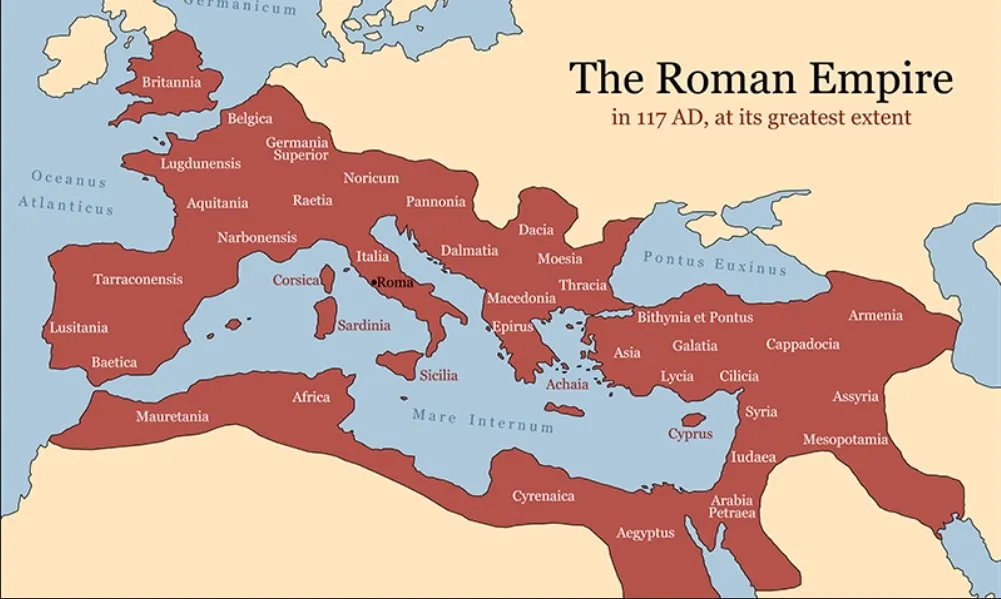 Photo: Roman Empire, via 2.bp.blogspot.com
The Digital Transformation
Modern technology has created new possibilities for both tax collection and tax resistance that would have been unimaginable to previous generations. Digital surveillance allows governments to track economic activity with unprecedented precision, making traditional forms of tax evasion increasingly difficult.
But the same technology that enhances state capacity also enables new forms of resistance. Cryptocurrency, offshore digital banking, and the gig economy create opportunities for economic activity that exists largely outside traditional tax systems. More importantly, social media and digital communication allow tax resistance movements to organize and coordinate in ways that would have been impossible for previous generations.
The result is an arms race between state capacity and individual autonomy that mirrors the broader tension between surveillance and privacy in digital societies. Governments that win this arms race risk creating the kind of total surveillance state that undermines the legitimacy that makes voluntary tax compliance possible in the first place.
The Lesson Unlearned
Five thousand years of tax revolts have produced a clear and consistent lesson: sustainable taxation requires legitimate governance. When citizens believe that their government serves their interests and operates with their consent, they will voluntarily contribute significant portions of their income to support it. When that belief erodes, no amount of coercion can maintain the revenue flows that modern states require.
Yet governments continue to treat tax resistance as a technical problem rather than a political one. They invest in better collection technology, harsher penalties, and more sophisticated enforcement mechanisms while ignoring the underlying legitimacy deficits that make such measures necessary.
This pattern suggests something troubling about the psychology of political power: those who wield it seem constitutionally unable to recognize that their authority depends on the consent of those they govern. They interpret resistance as a challenge to be overcome rather than feedback to be heeded.
The historical record offers a stark warning: governments that cannot learn this lesson don't survive. They may persist for decades or even centuries through increasingly coercive means, but they eventually face the choice between fundamental reform and revolutionary overthrow.
The question facing contemporary democracies isn't whether they will face tax resistance — they already do. It's whether they will recognize that resistance as a symptom of deeper legitimacy problems, or continue treating it as a technical challenge until those legitimacy problems become existential threats.