Bread and the Ballot: Rome's Oldest Argument About Welfare Is Still Running
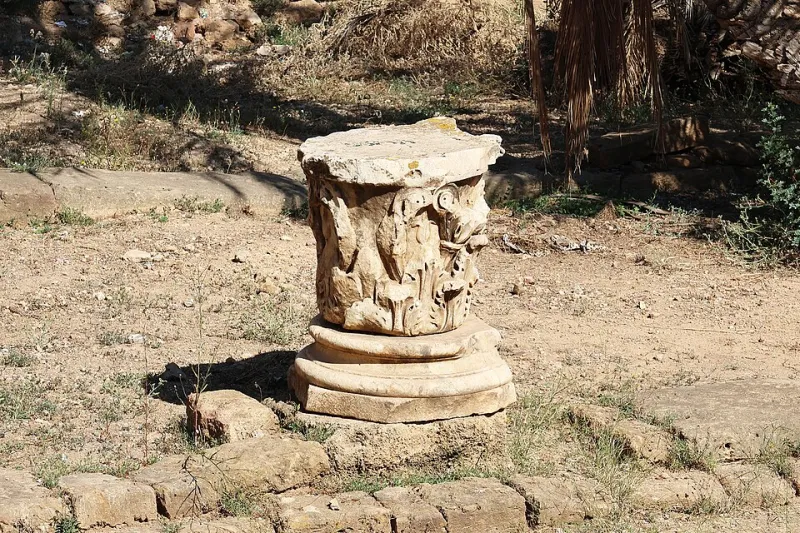
Photo: Bernard Gagnon, CC BY 4.0, via Wikimedia Commons
Sometime around 58 BC, the politician Publius Clodius Pulcher did something that would sound familiar to anyone who has followed an American election cycle. He took an existing welfare program — the subsidized grain distribution in Rome — and made it free. Not cheaper. Free. And in doing so, he created a permanent class of dependent clients who owed their survival to his generosity, and who voted accordingly.
His opponents were apoplectic. They accused him, in essence, of manufacturing dependence to purchase political loyalty. They were probably right. They had also, in earlier decades, run the same program more stingily for the same purposes. Nobody's hands were clean. That is the point.
The argument that followed — over whether the grain dole was charity or corruption, compassion or a leash — ran for the next four centuries. It has now been running in the United States for roughly sixty years, in nearly identical language, over food stamps, unemployment insurance, and every benefit program since. We are not having a new debate. We are performing a very old one.
What the Annona Actually Was
The annona — the state grain system — began modestly. Rome's population outgrew what local agriculture and private markets could reliably supply, and the city depended on grain shipped from Sicily, North Africa, and Egypt. Interruptions meant hunger, and hunger in a crowded capital meant riots.
The state's involvement began as market management: buying grain, stabilizing prices, distributing it at a subsidized rate to registered citizens. Over time the subsidy deepened. By Clodius's era it was free. Under the emperors it became a full administrative apparatus — lists, ration cards, distribution ports — feeding somewhere in the range of two hundred thousand people in the city of Rome alone.
Sound familiar? A program that began as emergency logistics hardened into a permanent entitlement. Enrollment became a political prize. Politicians expanded it to win elections and tried to trim it to balance budgets, and the trimming never stuck. Americans will recognize every beat of that story; we have simply substituted SNAP cards for ration tickets and the Supplemental Nutrition Assistance Program for the cura annonae.
The Arguments Never Change
Listen to what Rome's elites actually said about the dole, and then listen to a modern American debate over benefits. The overlap is startling.
The charge of dependency: Rome's critics argued that free grain made the urban plebs idle and unmanly, unwilling to work when the state would feed them. The modern version cites labor force participation and argues that benefit cliffs discourage employment. Identical structure: the benefit weakens the recipient.
The charge of vote-buying: Roman politicians were accused — often accurately — of expanding the grain dole to build personal followings. The modern version accuses the party in power of expanding benefits before elections to create a grateful electorate. Identical structure: the benefit is a bribe, and the recipient's gratitude is the purchased commodity.
The charge of fiscal ruin: Rome's grain system consumed an enormous share of state revenue, and emperors periodically wrestled with its cost. The modern version is a CBO score and a fight over the debt ceiling. Identical structure: the program is unaffordable, and its defenders care more about recipients than solvency.
And on the other side, the defenses were just as constant. The dole kept order. It prevented starvation in a city with no safety net whatsoever. It recognized that a capital of a million people could not survive on private charity. Defenders then and now made the same appeal: whatever the program's imperfections, the alternative is visible suffering in the streets.
Why the Script Repeats
The reason the same arguments recur is not coincidence. It is that the grain dole — like SNAP — sits on a genuine structural tension in democratic politics, and no society has ever resolved it.
A democracy must feed its capital and its poor, because hungry populations destabilize it. But a democracy also runs on competition for votes, and any large benefit program is simultaneously a lifeline and a political asset. The moment a program feeds enough people, it becomes a constituency, and the constituency defends it, and the politicians who expand it harvest the gratitude. This is not a conspiracy. It is arithmetic.
And because it is arithmetic, the moral arguments — dependency, dignity, bribery — never resolve anything. Both sides are describing something real. The program does create dependence; that is what feeding people does. It does create political loyalty; that is what survival does. The question was never whether these effects exist. The question is whether a society prefers a dependent, loyal, fed population or an independent, uncommitted, hungry one — and no politician in five thousand years has wanted to answer that honestly.
The Ending Worth Noting
The annona outlasted the Republic that argued about it, the Republic that Clodius helped destabilize, and nearly every institution of classical Rome. It fed Constantinople into the sixth century AD. It was, by longevity, one of the most successful government programs in human history — and one of the most resented by the people who paid for it.
That may be the most useful thing it can tell Americans currently arguing over benefits. The program that both sides love to attack — as dependency on one side, as stinginess on the other — endured because dismantling it was politically impossible and morally fraught, exactly as its defenders hoped and its critics feared.
The debate over whether the state should feed people has no resolution, only a recurring performance. Rome ran it for five centuries. We are a few decades in. We should at least have the humility to admit we know how the script goes.